About the project
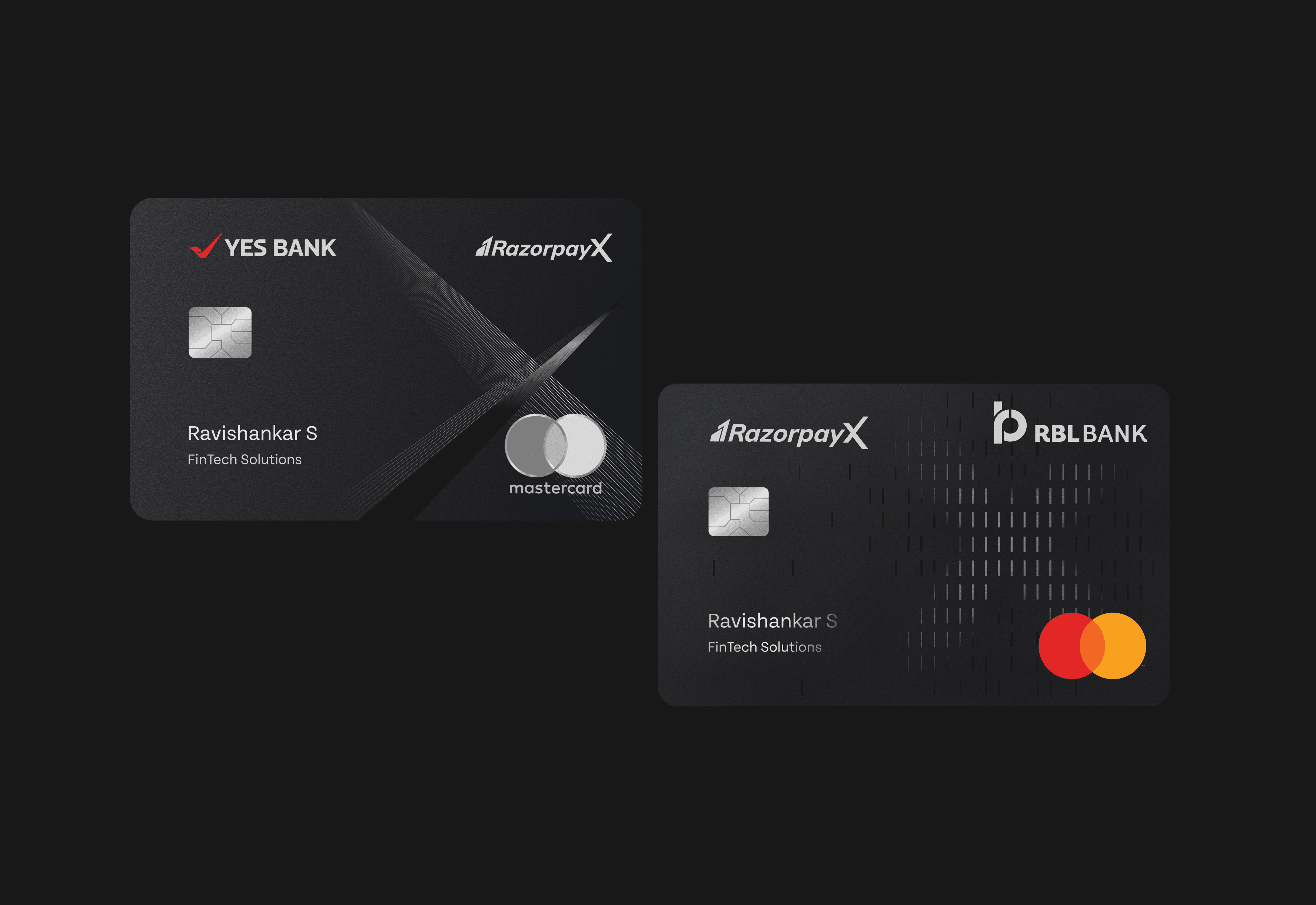
RazorpayX, in collaboration with Yes Bank and RBL Bank, launched co-branded credit cards tailored for startups and enterprises. The cards are designed as smart financial tools, enabling businesses to manage spending across marketing, SaaS, technology subscriptions, and operational expenses while unlocking savings and relevant benefits.
This project explores the design of a premium, modern credit card experience that reflects the identities of the partner brands while balancing aesthetics with real-world functionality.
my role
Card design
Packaging concepts
design team
Ayushi Gaur
Divya Lohia
Kalyani Nerurkar
Avantika Swarup
Target audience

The credit card would mainly be used by startup founders ‘disruptors’. In enterprises, the card would also be used by finance teams.
usage & experience
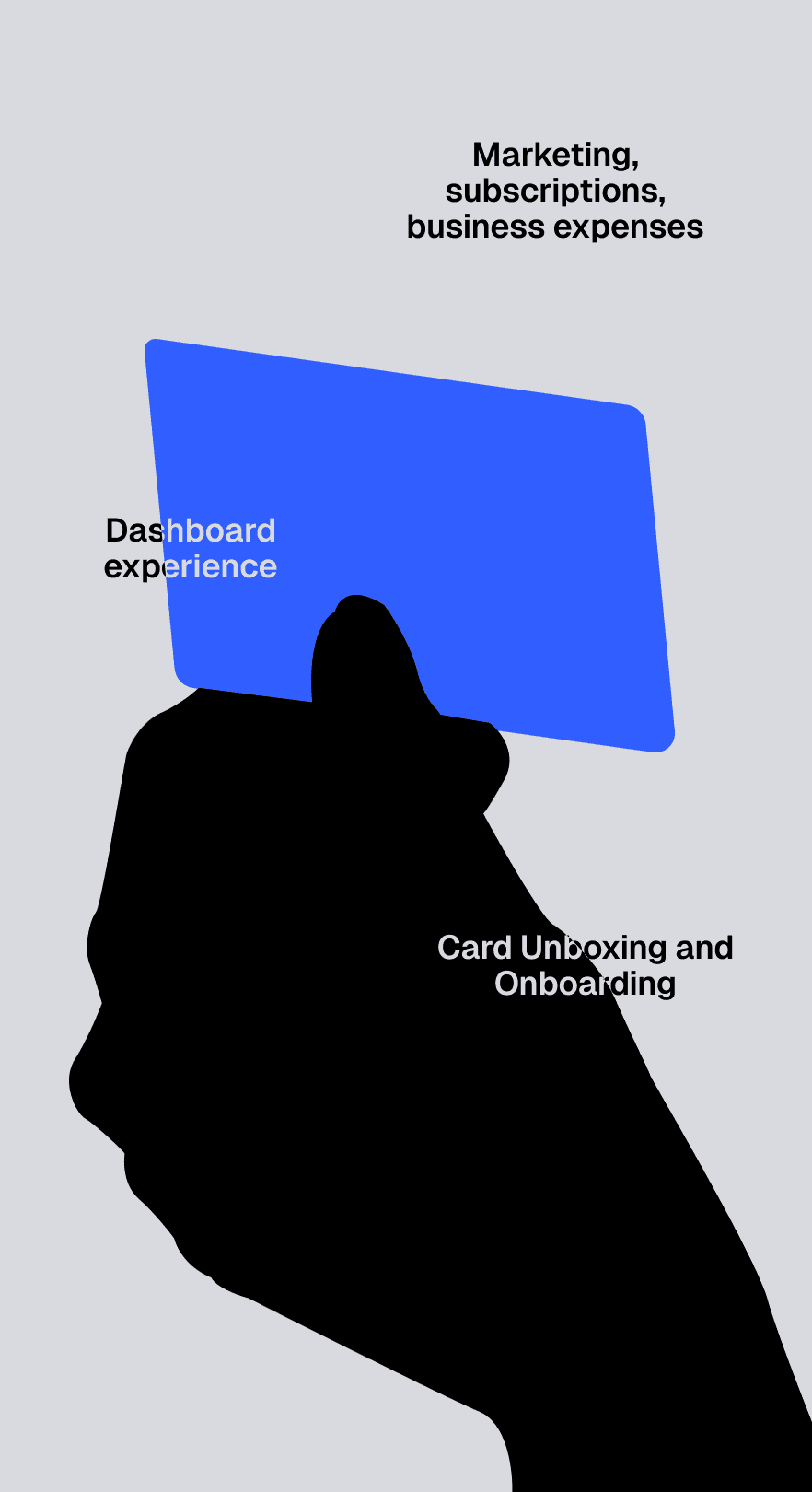
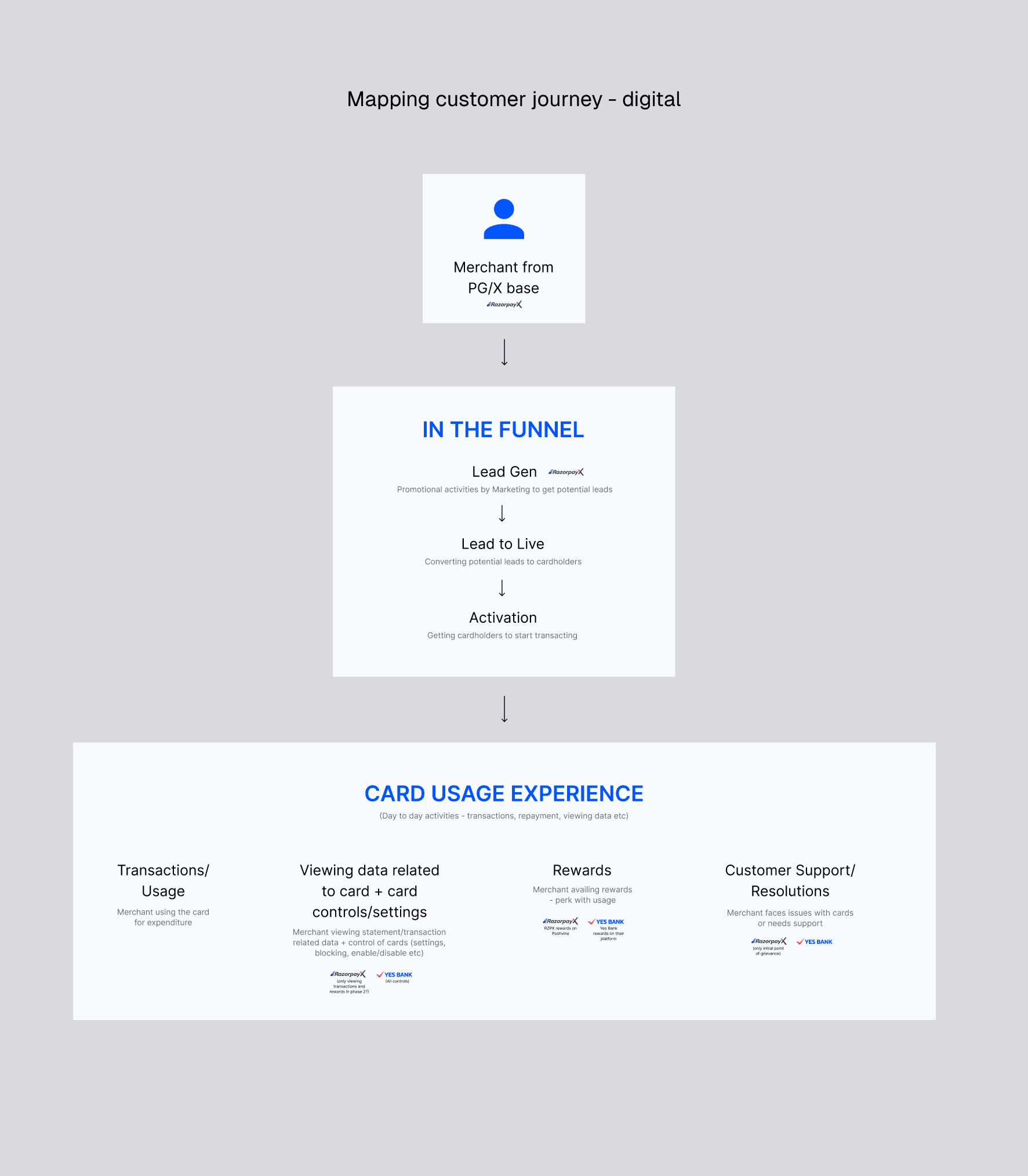
The most common uses include recurring business related payments for subscriptions, tools, marketing etc.
A major touchpoint of the card experience is the RazorpayX dashboard - where the card, payments and controls are managed.
bANK, PARTNER & RBI GUIDELINES
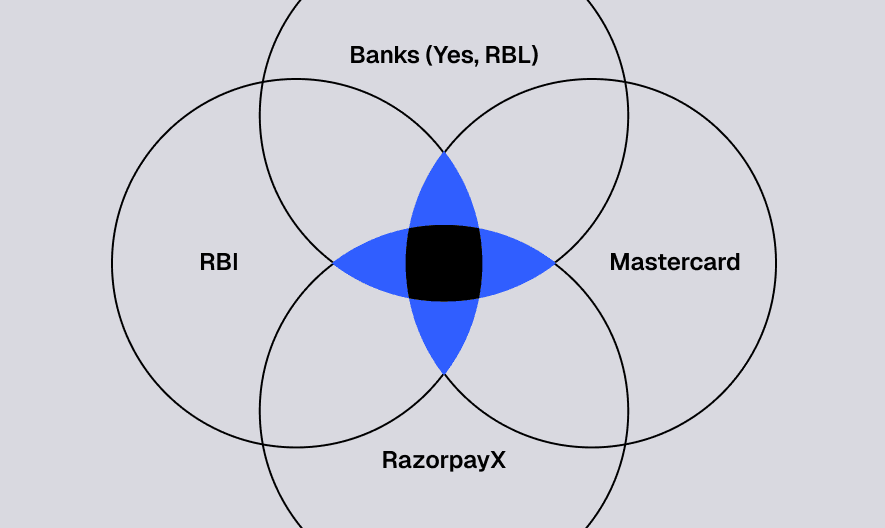
The design needed to adhere to Yes bank & RBL bank brand guidelines, partner Mastercard guidelines as well as the RBI rules. This involved extensive study and back-and-forth communication between involved parties.
key attributes
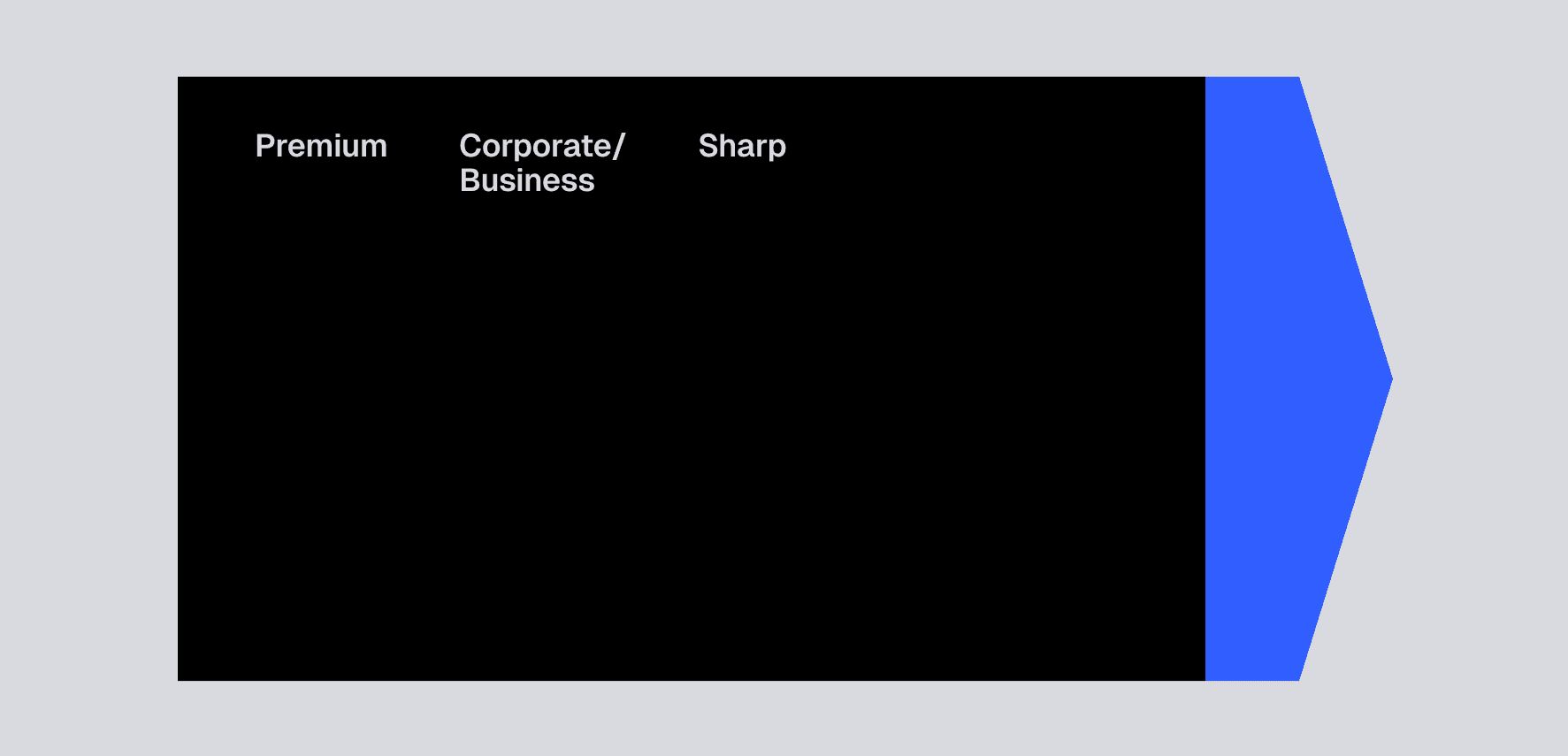
Keywords were distilled down keeping end user experience/perception in mind.
Premium - Experience becomes curated and high quality
Corporate/Business - Caters to the right audience and environment
Sharp - Adds ‘razor’ sharp character
preliminary study
initial explorations
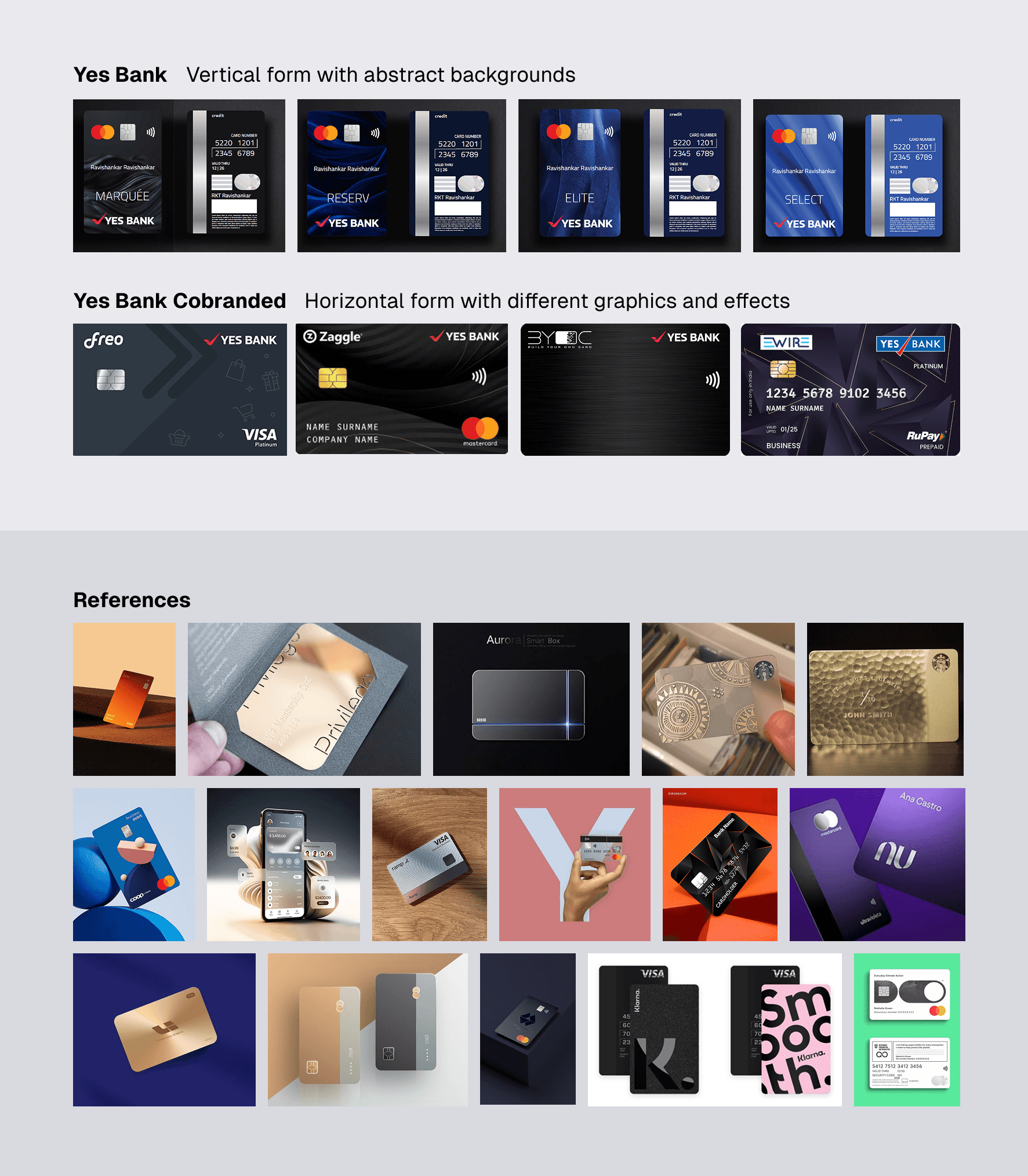
The earliest iterations (Yes Bank) played with forms, colors, type, layouts, materials. As the process went along, concepts were selected in accordance to brand guidelines of both the bank and RazorpayX.

The first shortlisted option merged the visual characteristics of both the brands - the red + blue kept true to the essence of Yes Bank and the abstracted ‘X’ form gave a nod to RazorpayX.
Although stakeholder reviews were generally positive, there was a need for innovation. The design brief was re-examined and rewritten to push the boundaries further.
phase 2//refreshed BRIEF
Card design should be ‘premium’, ‘modern’ and creatively showcase the ‘X’ symbol.
In-depth discussions with stakeholders uncovered questions such as:
→ How to make the card resemble Razorpay and not just X?
→ How to make it memorable, unique and not just look like any other card in the market (need something more ‘path breaking’)?
→ Rethink what ‘premium’ is.
This helped open up additional design directions:
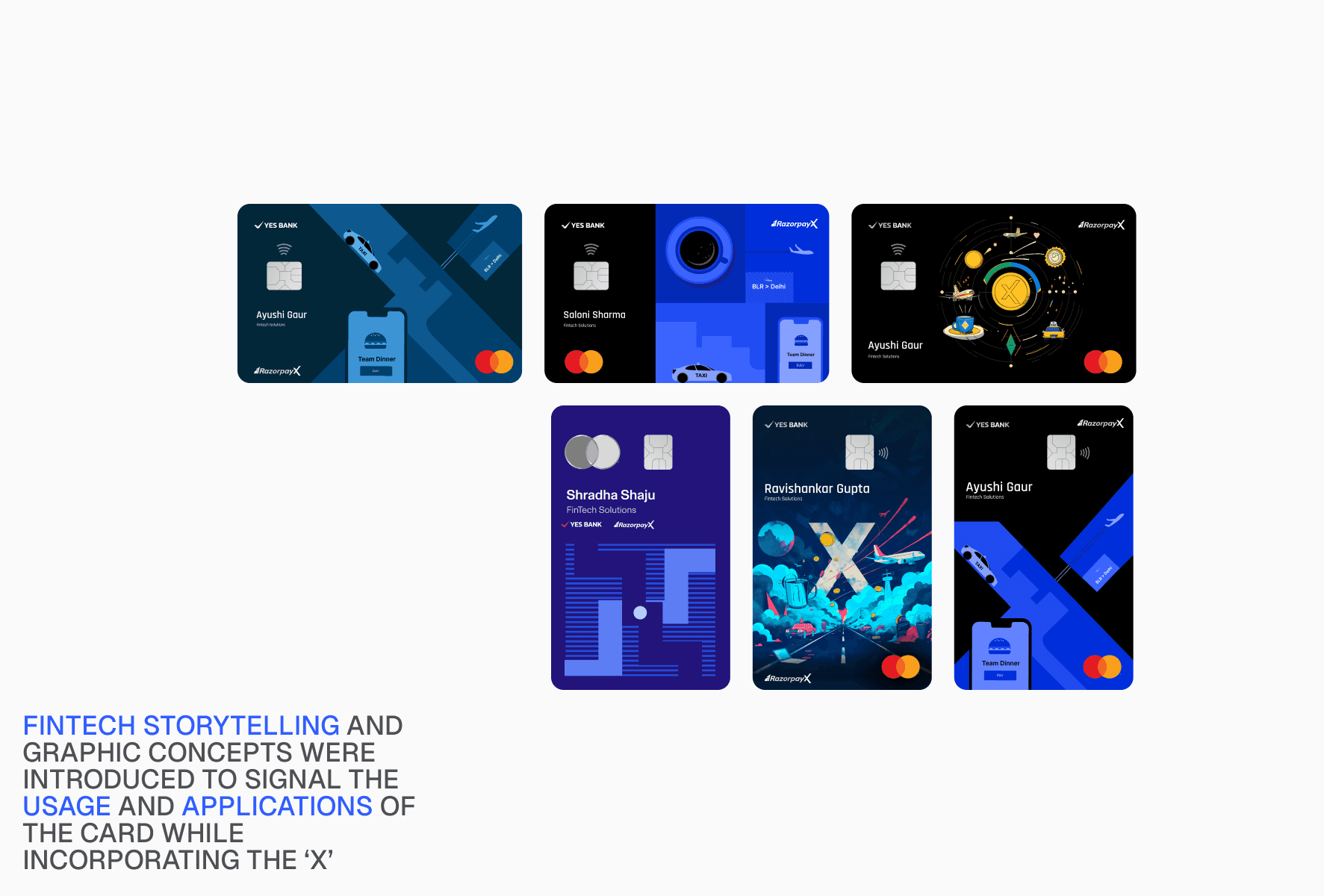
→ Storytelling by showing what the card is solving for the merchants.
→ Illustrating benefits, use cases or journey of the merchant.
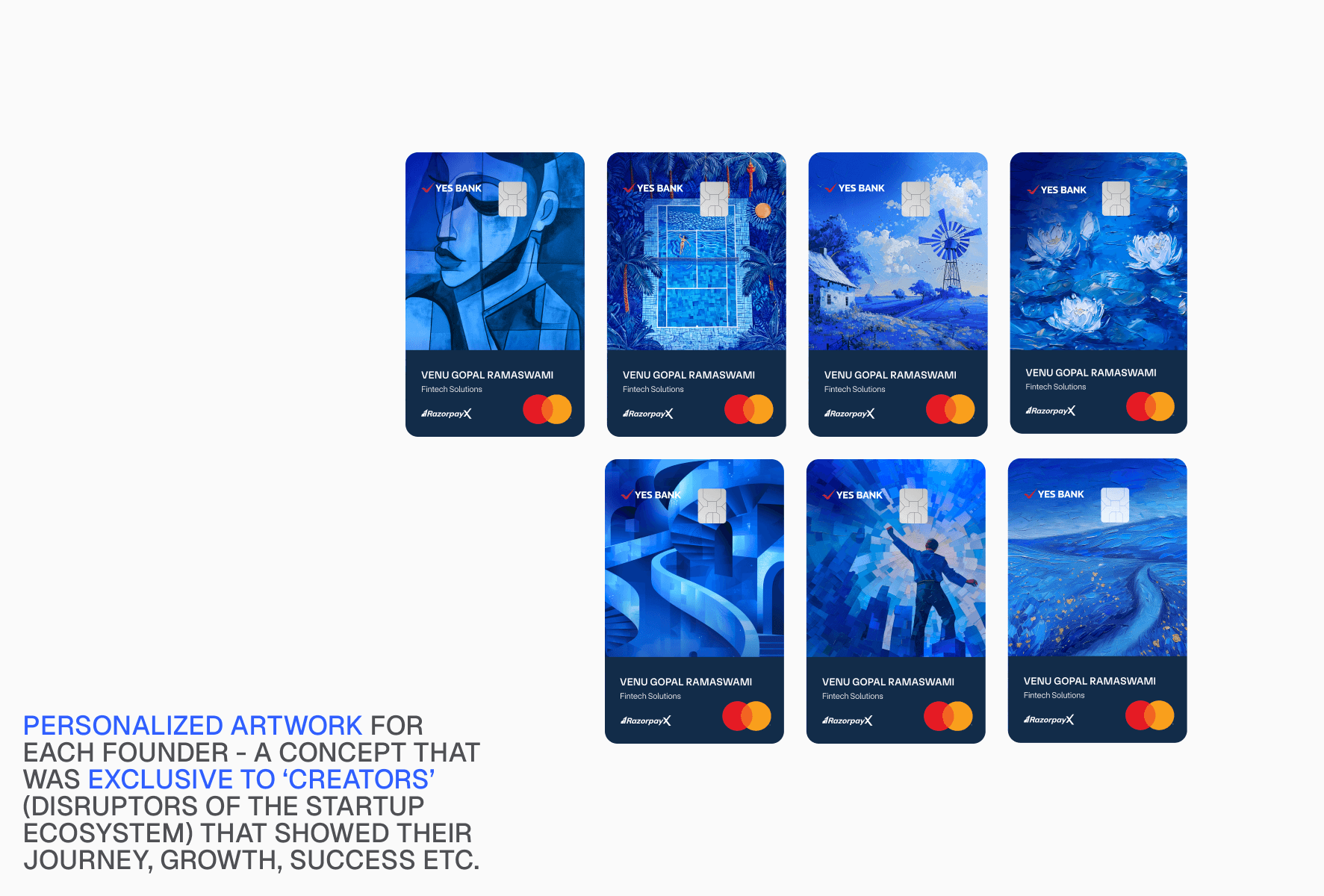
→ Emotional aspect - depict how RazorpayX enables growth
card 1 - yes bank - new explorations
The new set of iterations kicked off with Yes Bank card designs. The team explored different routes. (Very few shortlisted options shown below)
Tactile experience
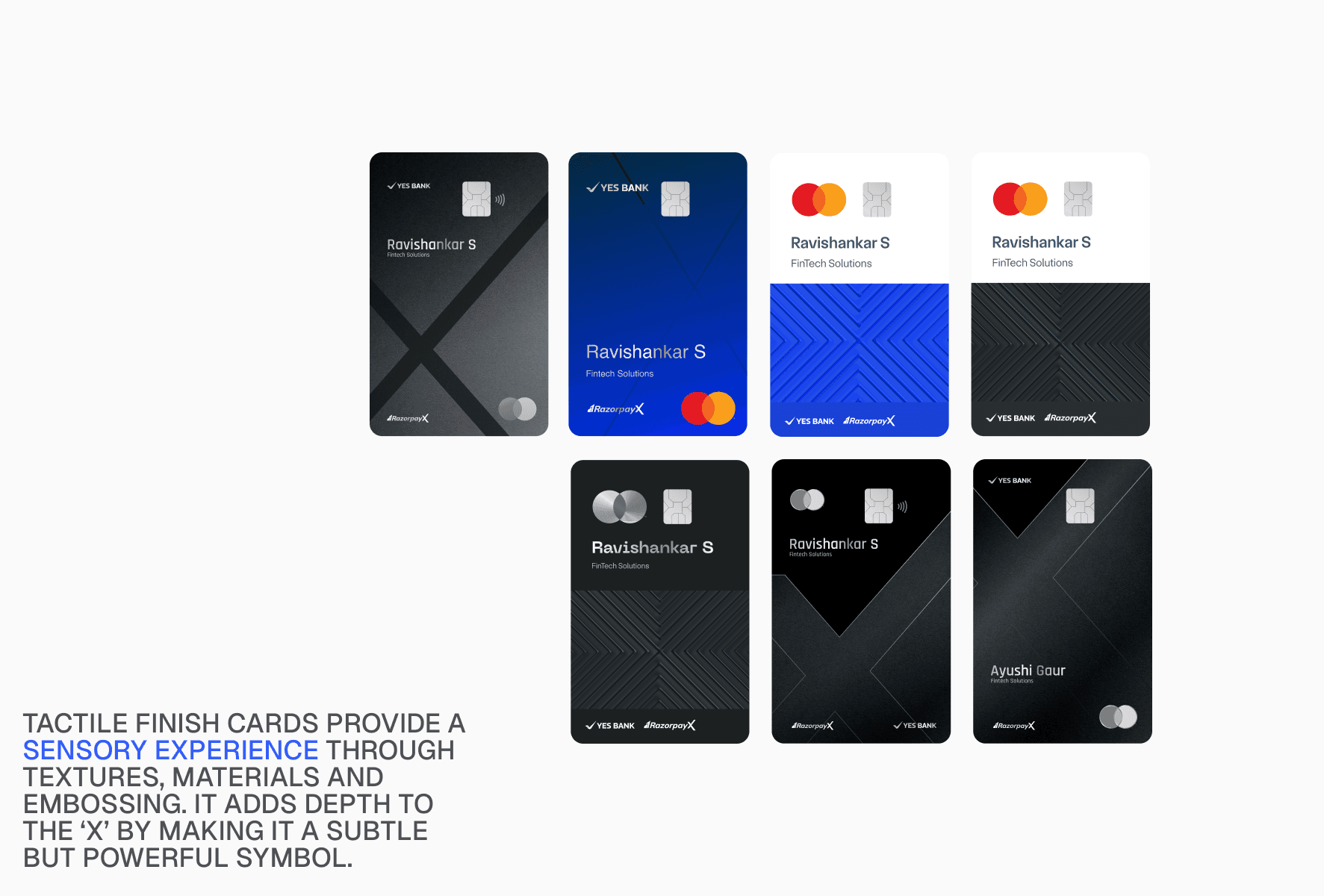
Abstract forms + X
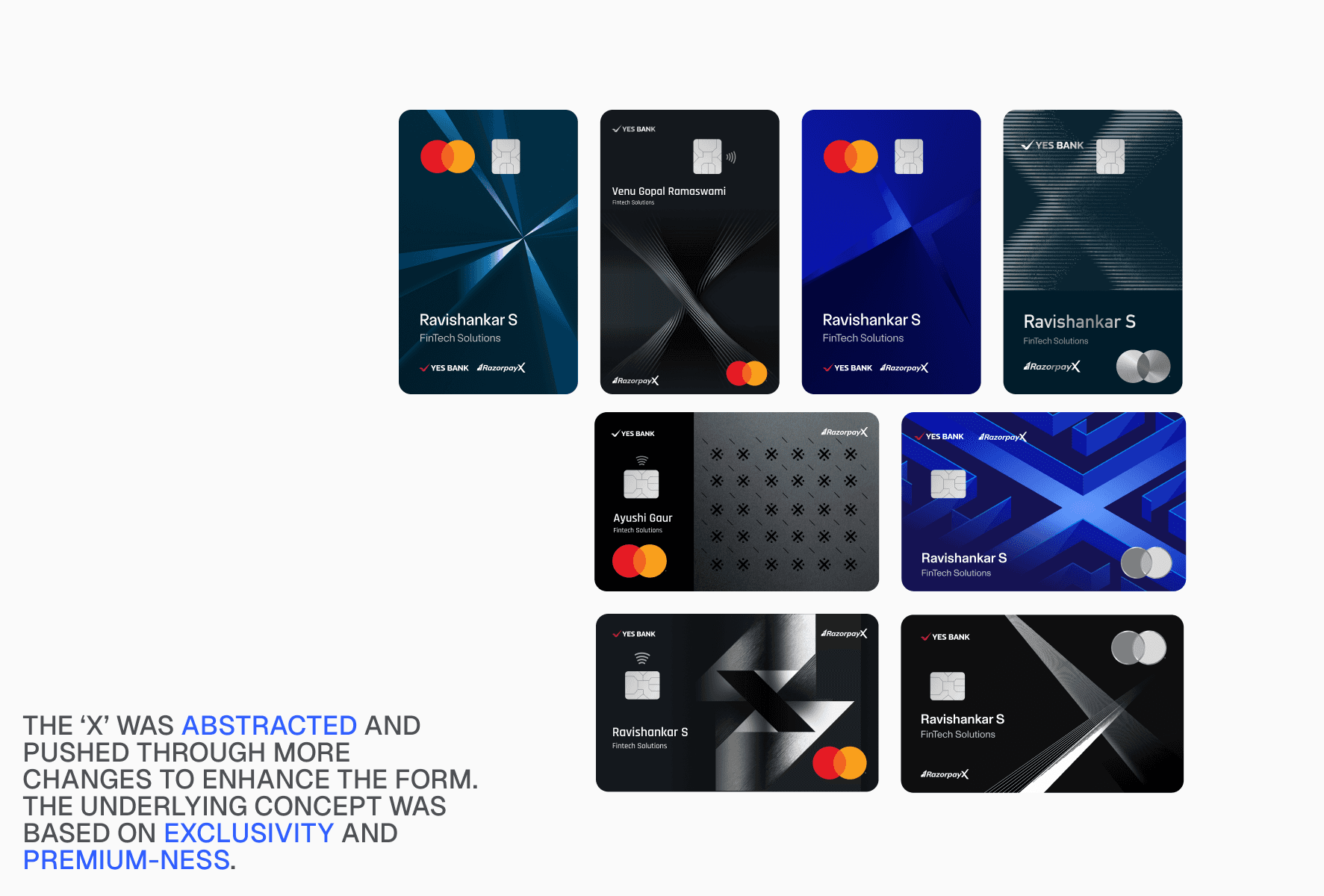
Illustrated storytelling
Personalized artwork
Other directions
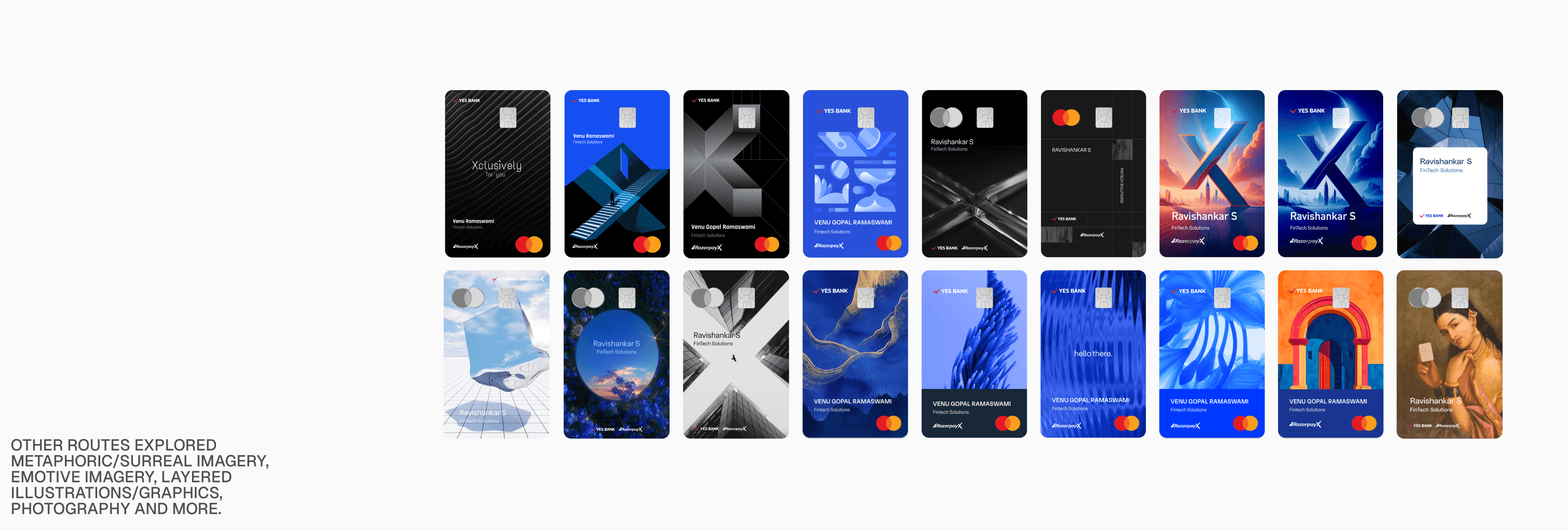
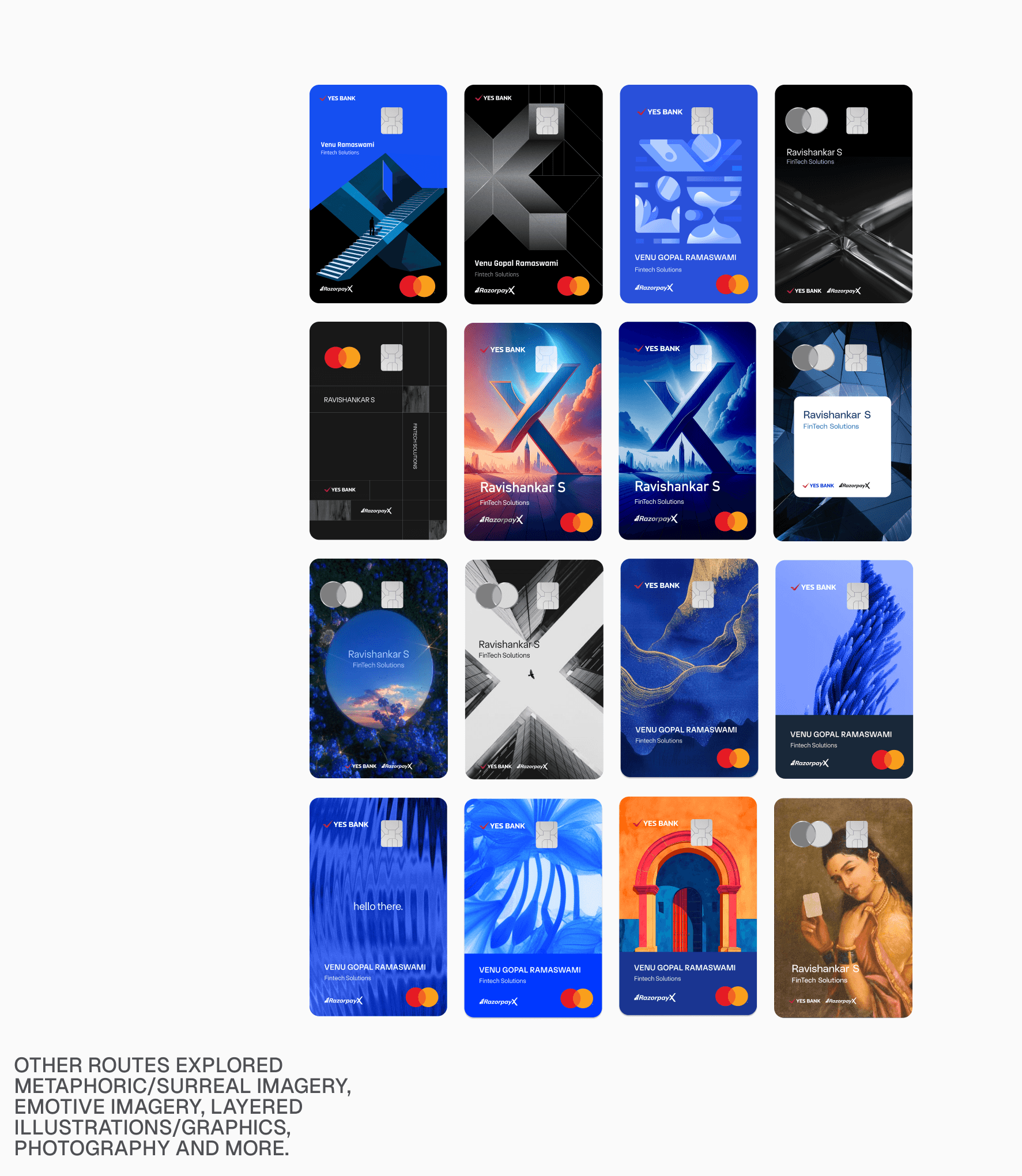
This was an extensive, iterative and team-led exercise done by the comm design team joined by product designers and guided by leaders.
card 1 - yes bank - final design
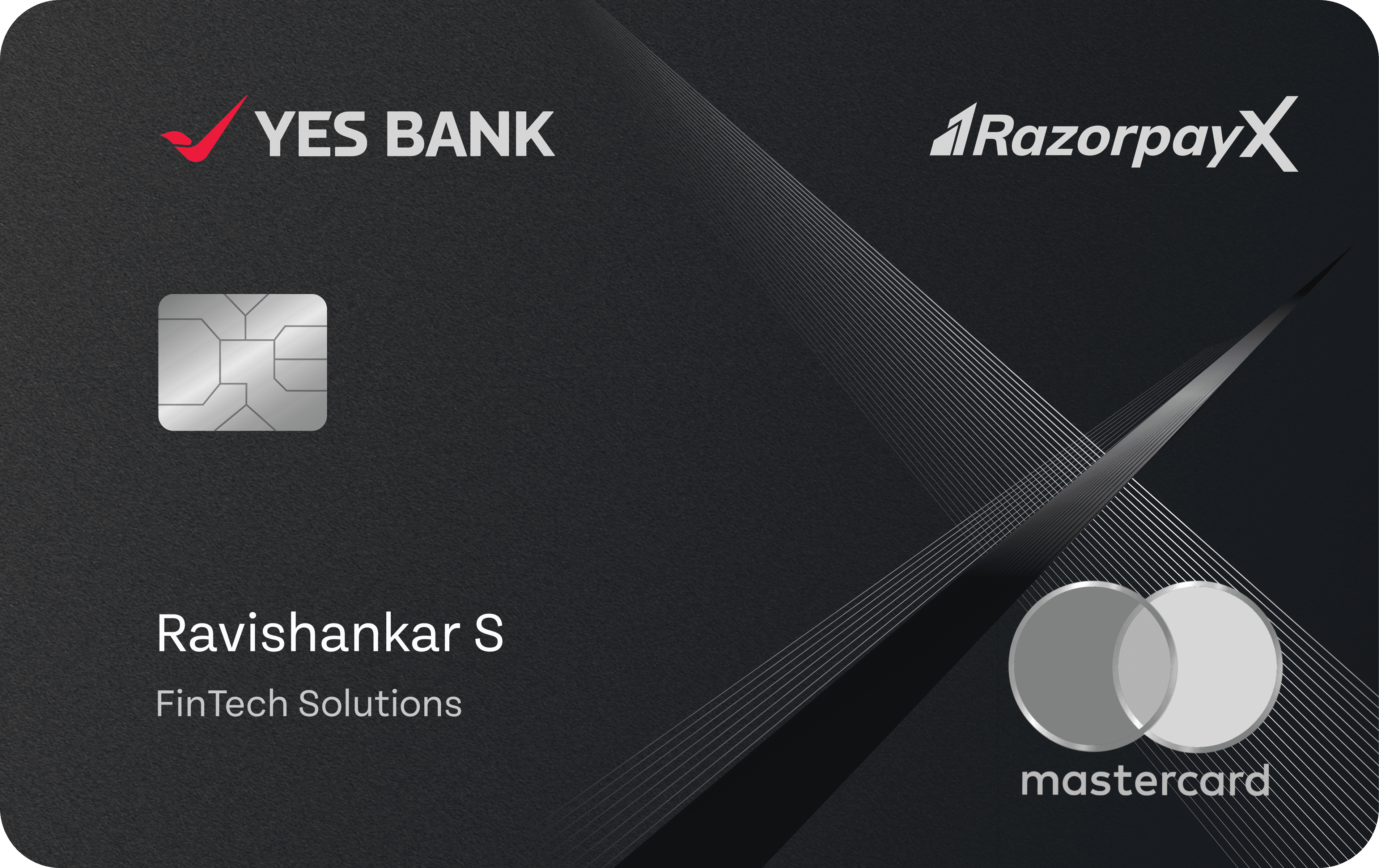
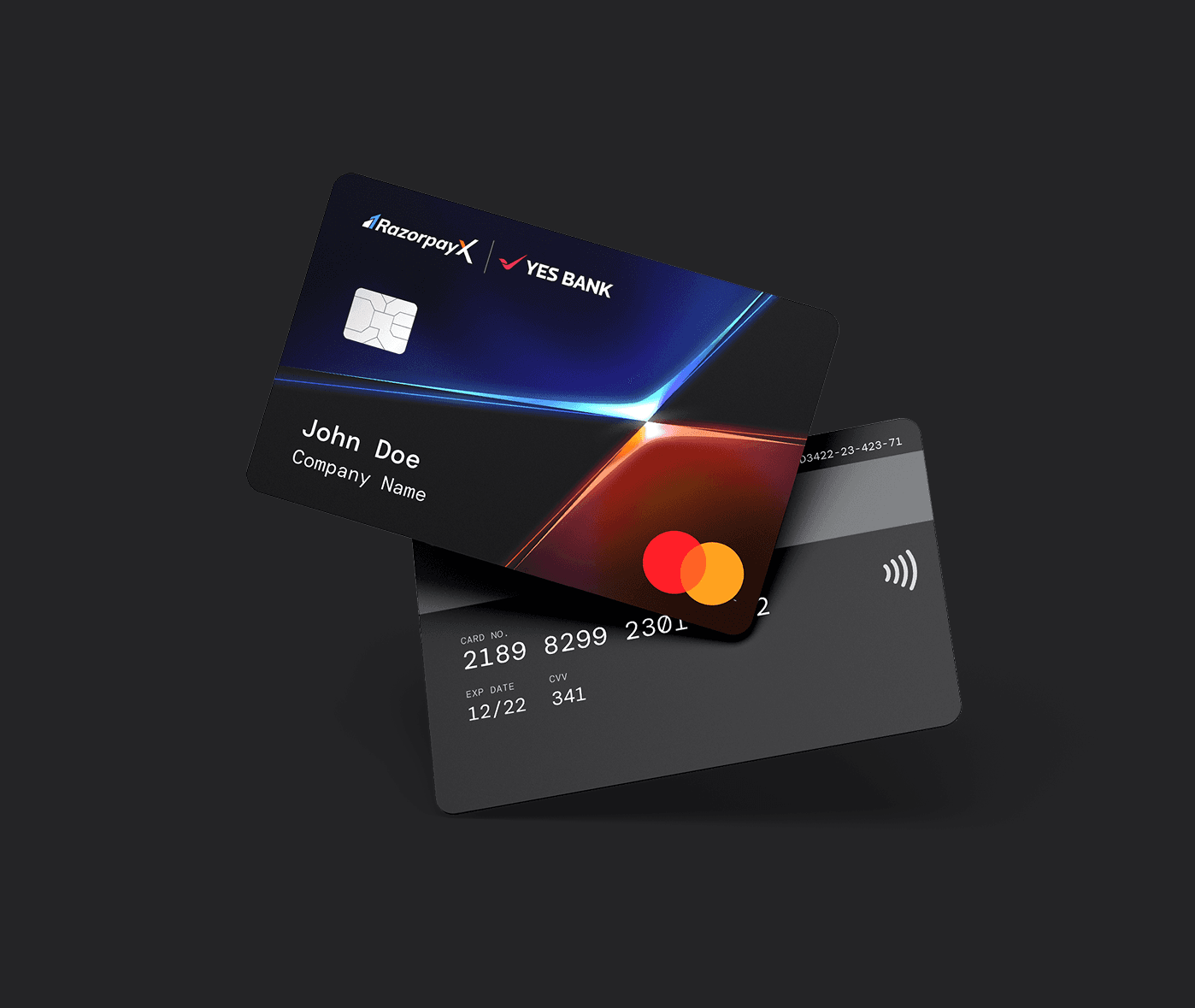
The final selected concept sports a premium, minimal graphic over a dark plastic base.
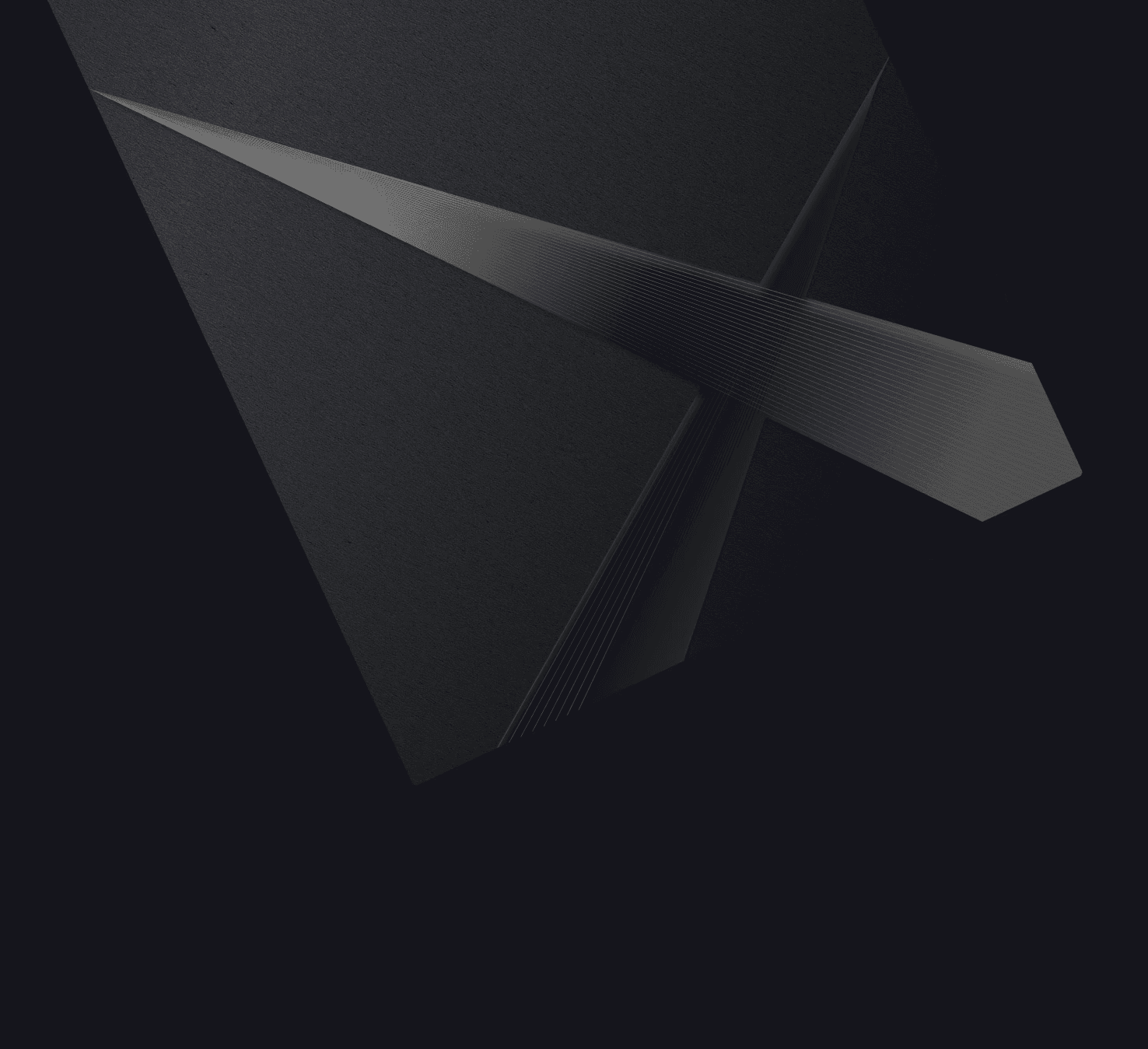
The ‘X’ form is composed of lines and a triangular shape converging - bringing some level of dynamism to the graphic.
The clean layout, sizes and placement of elements adheres to Mastercard and Yes Bank guidelines.
The elements on the frontside are restrained - highlighting the cardholder’s name and branding alone.
Black, often perceived as premium, was employed aptly to match end-user experience.
Spot UV treatment over the graphic enhances the tactility - adding a subtle extra layer to the physical experience.
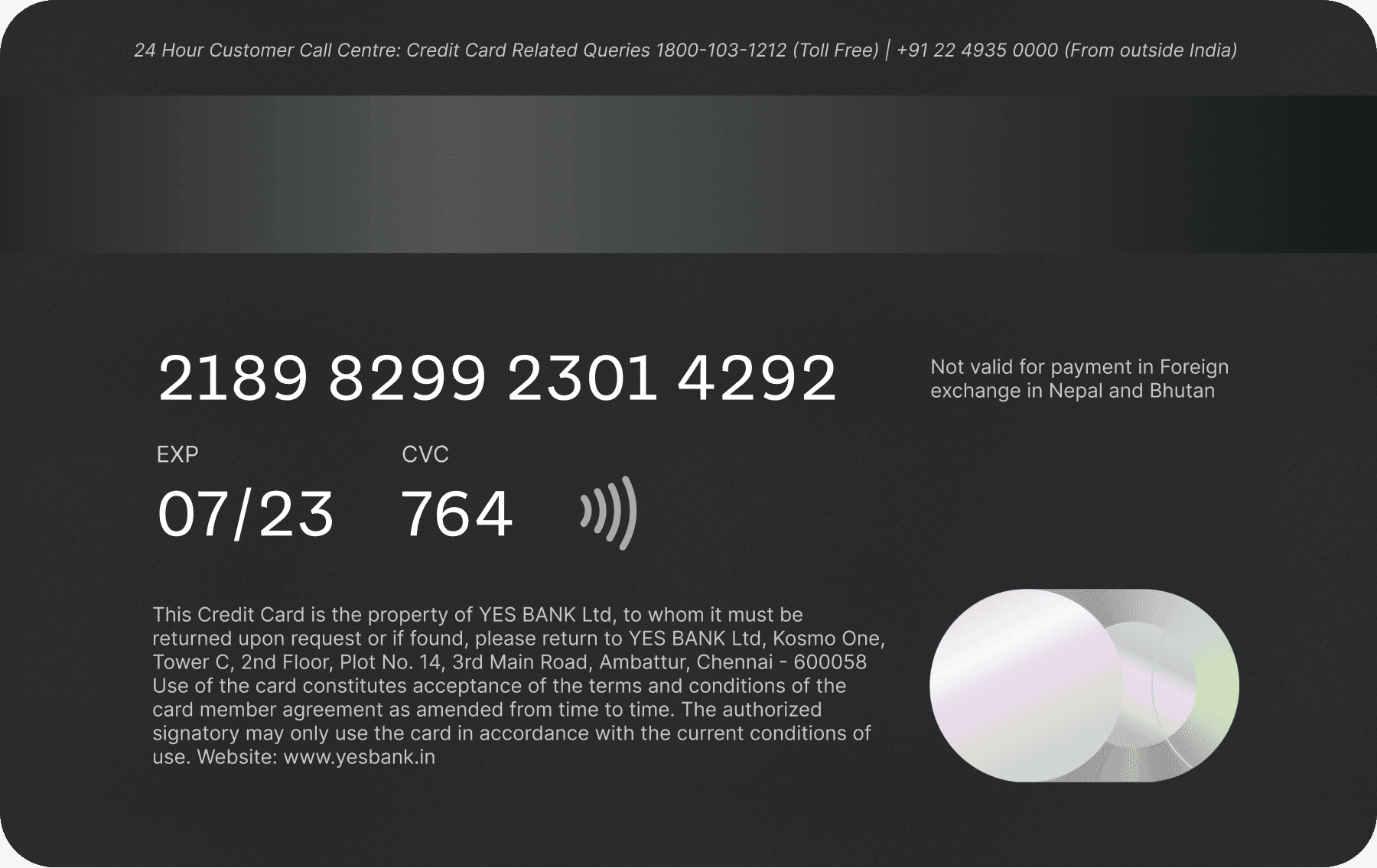
A modern, tech-forward sans-serif font, Tenon, was selected for printing the cardholder’s name, company name, card number, date and CVC. For fine print, Inter was chosen for it’s readability and brand adherence.
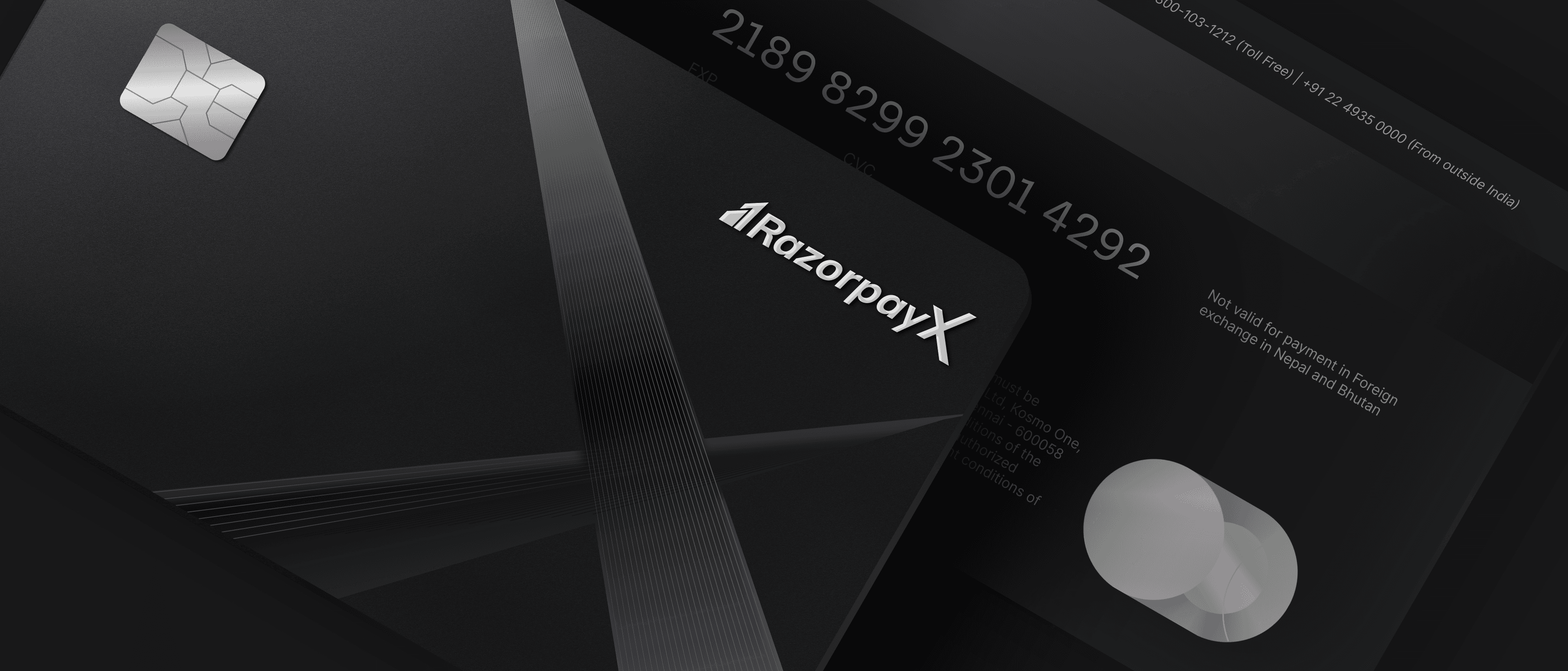
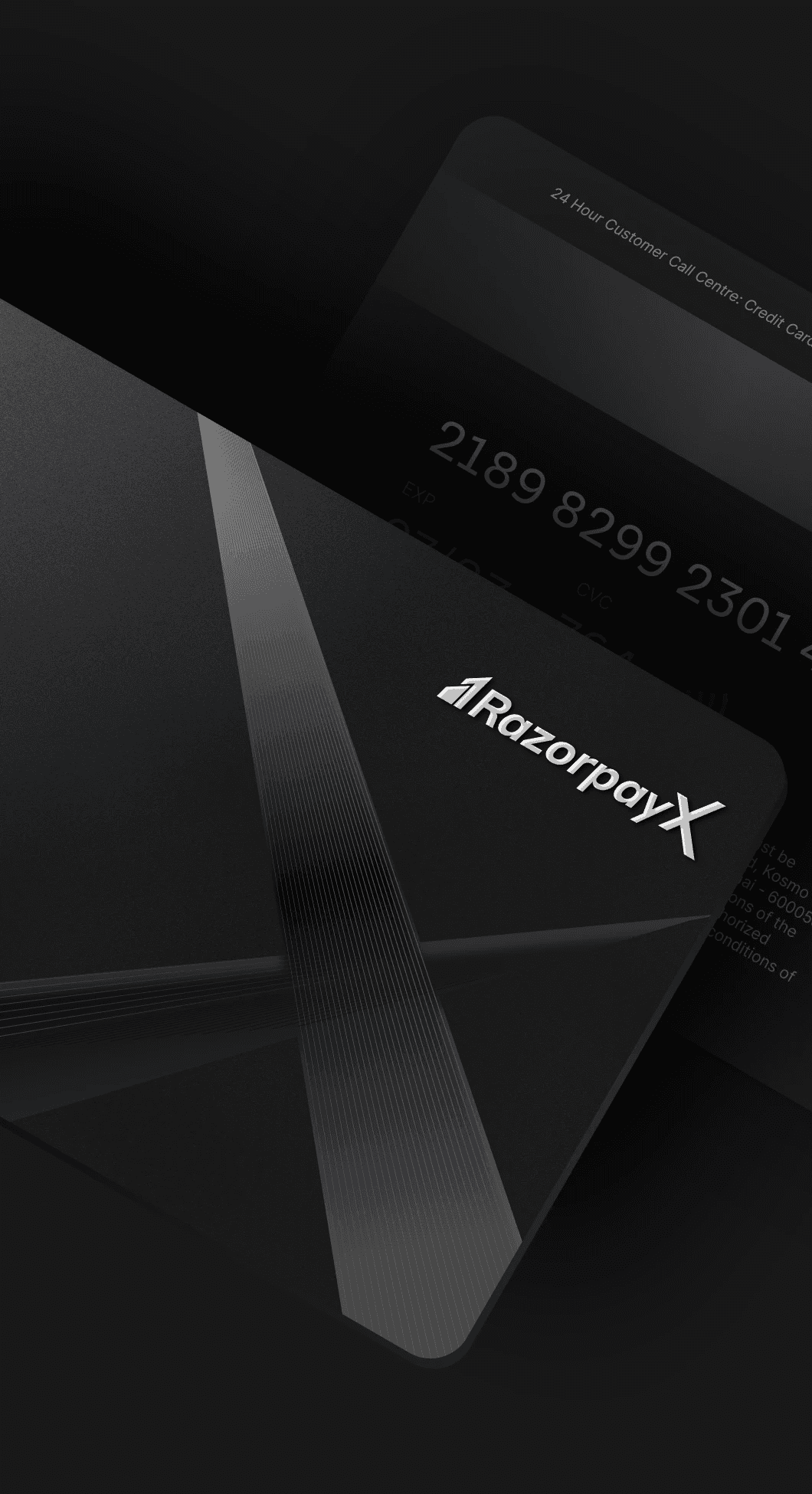
The layouts, sizes, placements were iterated multiple times with millimetre changes to achieve a balanced look while taking into account print constraints and network regulations.
card 1 - yes bank - packaging
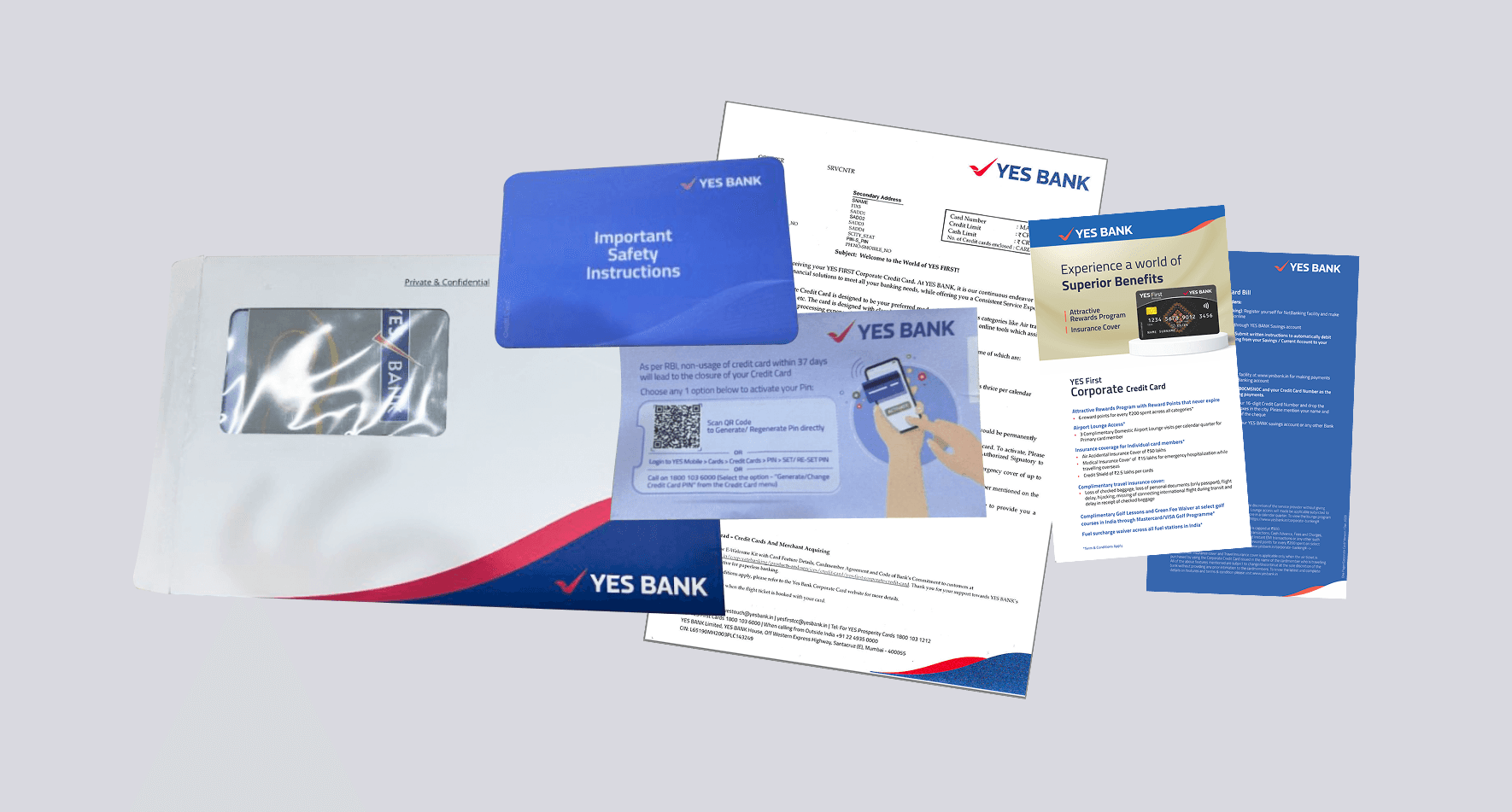
To elevate the existing packaging solution by Yes Bank, the envelope was redesigned along with the contents. The constraint here was to keep the experience lightweight, ie, to retain the envelope format.
During the initial phase, different types of card packages were handed out to peers and observed to learn how they interact, react and use the packaging (including how they open, what directions they open in, reading order, order in which they read etc). The observations were then used to guide the refreshed envelope design.
card 1 - yes bank - final Packaging
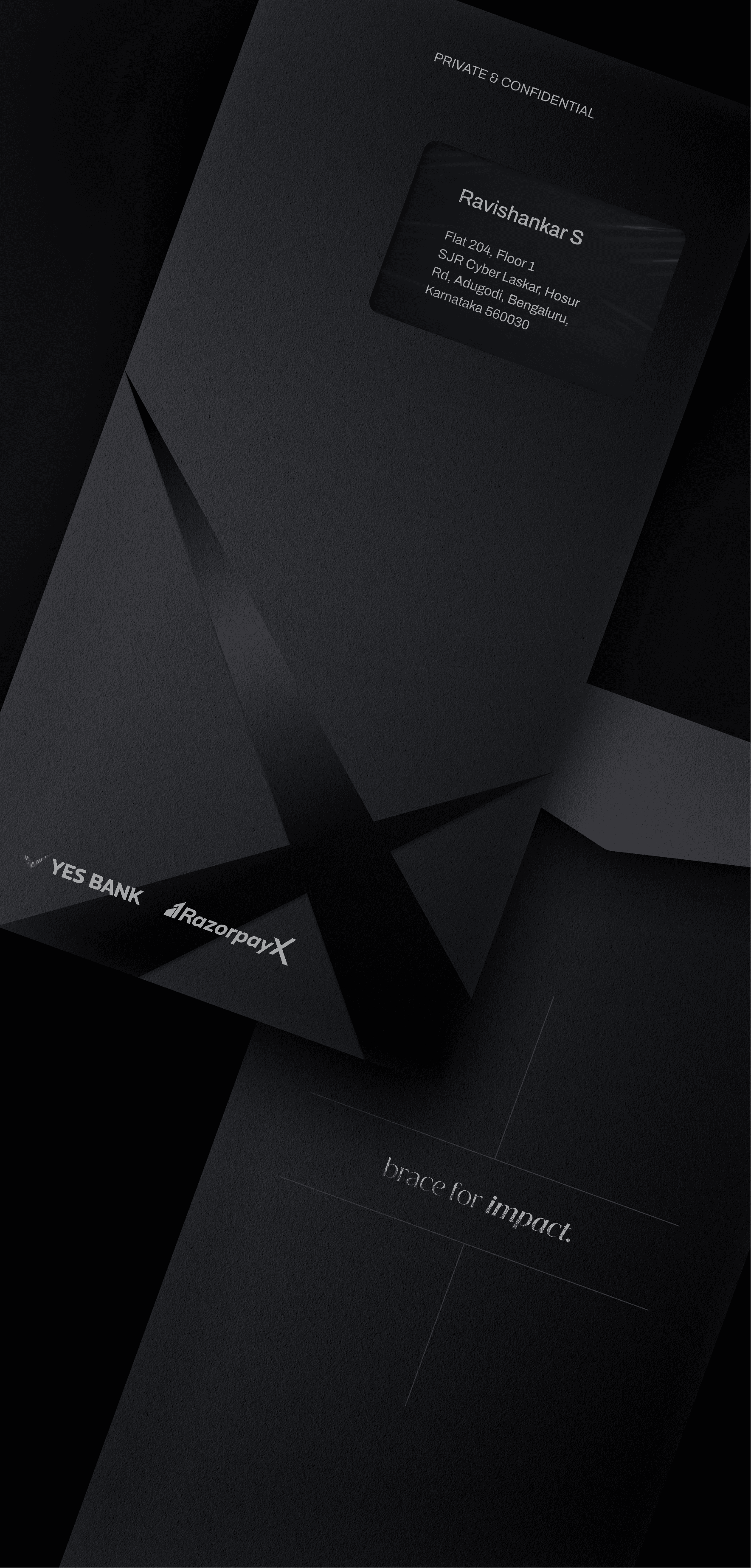
A light-weight packaging experience was designed to accommodate the card and its accompanying contents - welcome message, activation steps, safety instructions, rewards and contact information. The design keeps the receiver’s opening and reading order and experience in mind, with minimal friction.
The design is an extension of the card design itself - a blend of premium and modern themes highlighting the card. Blue, a primary color of both the brands, was incorporated into the packaging as well. The receiver’s experience, starting from the mail delivery to storing was mapped, optimized and designed for.
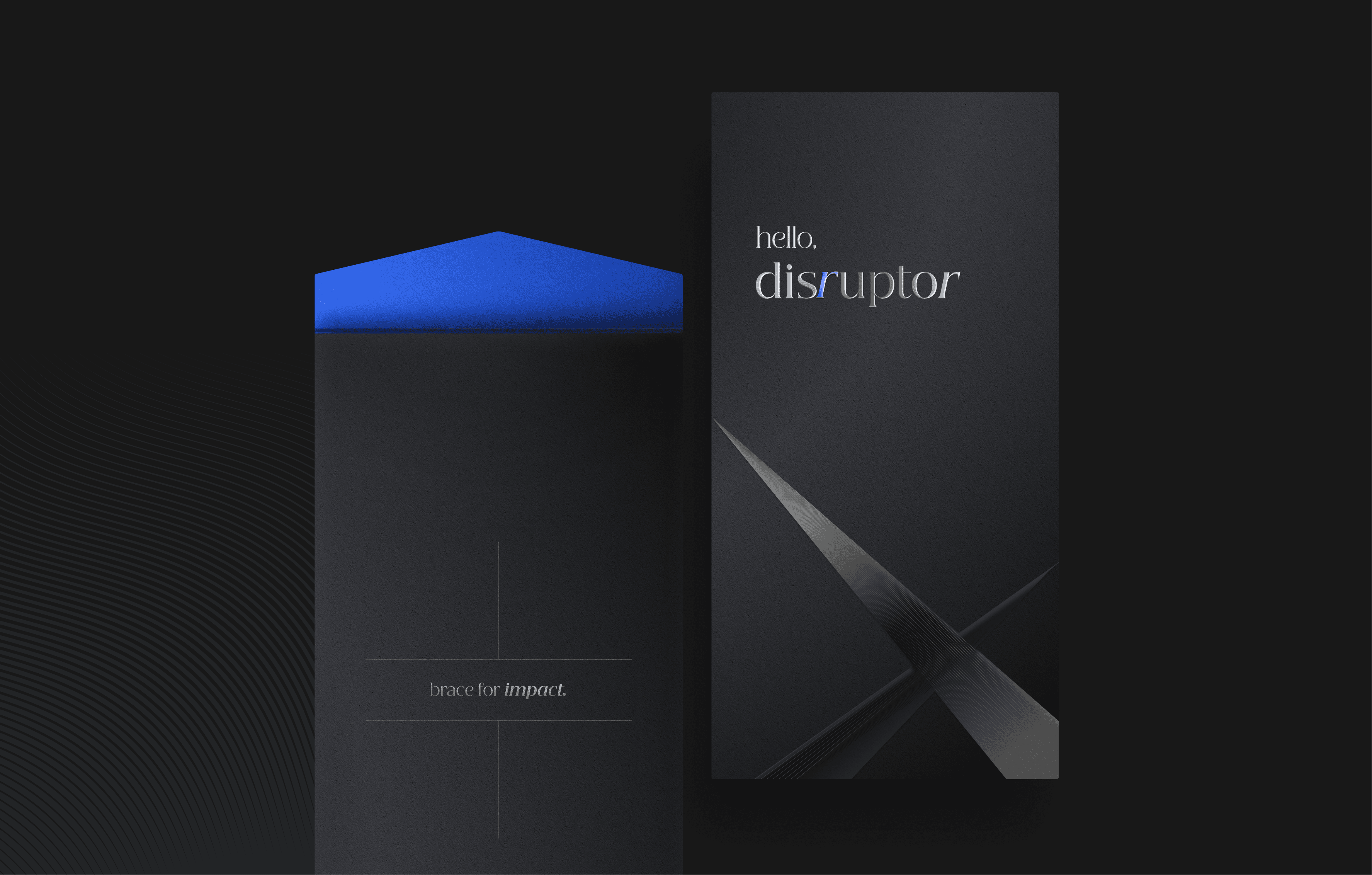
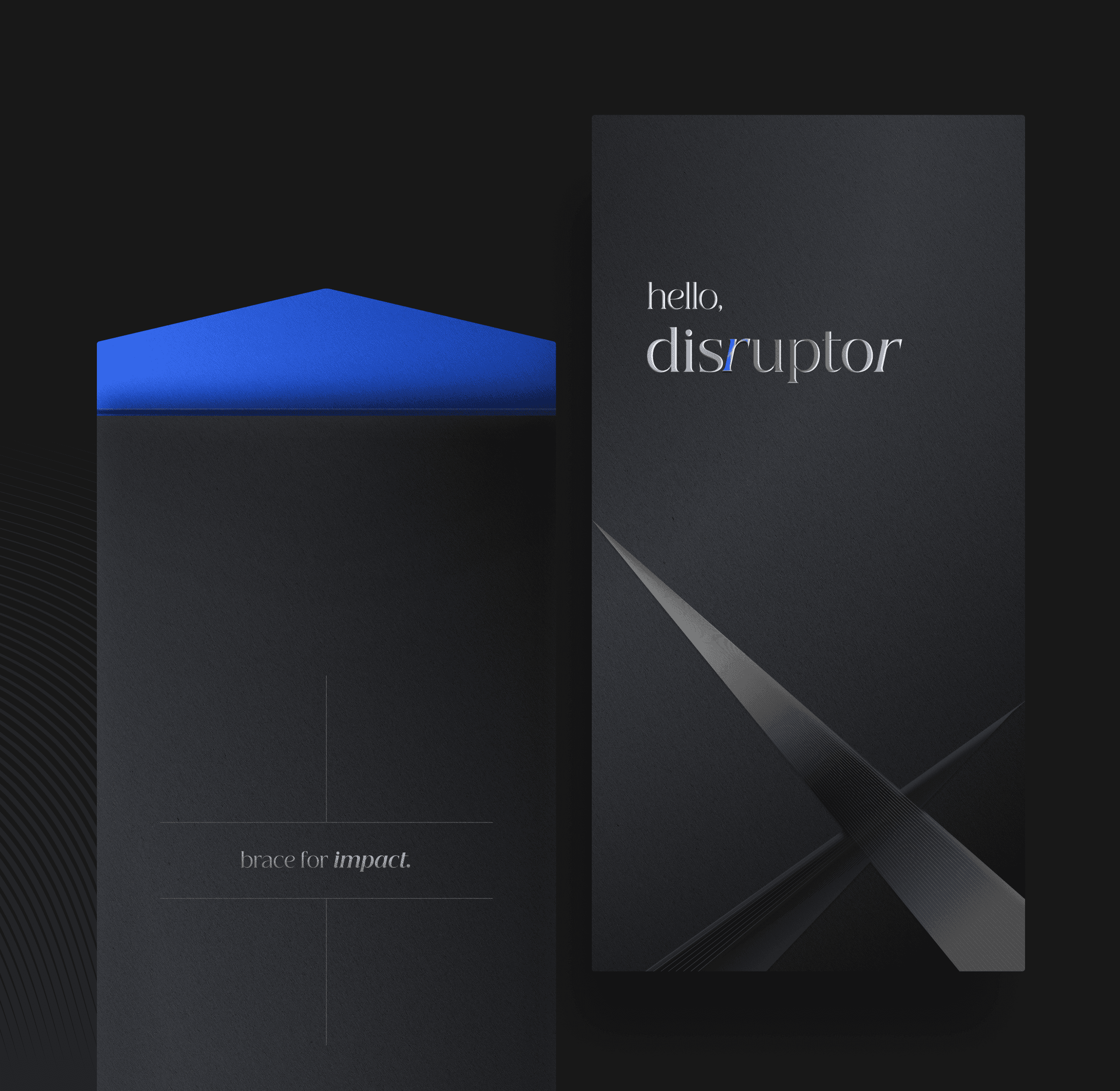
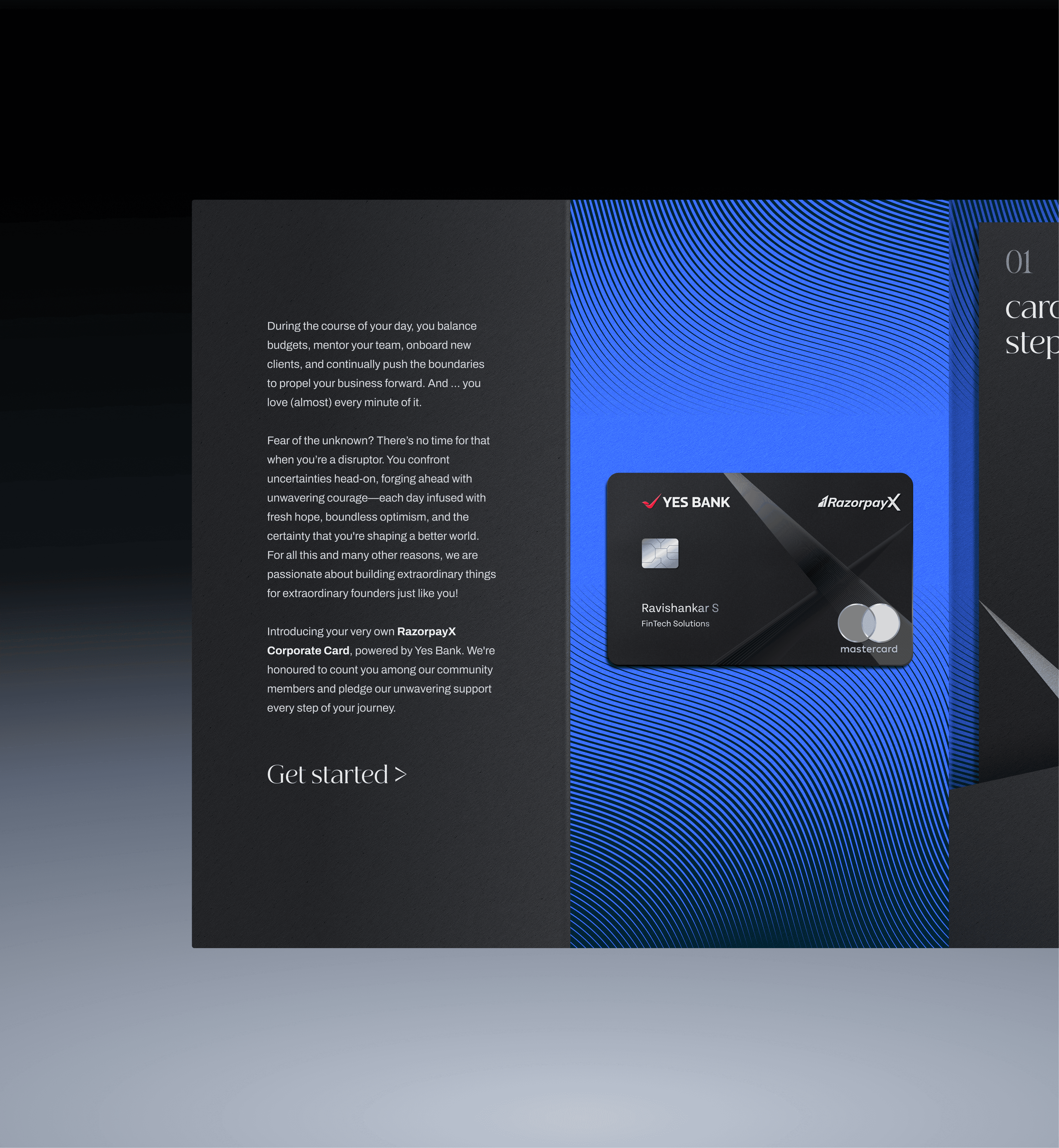
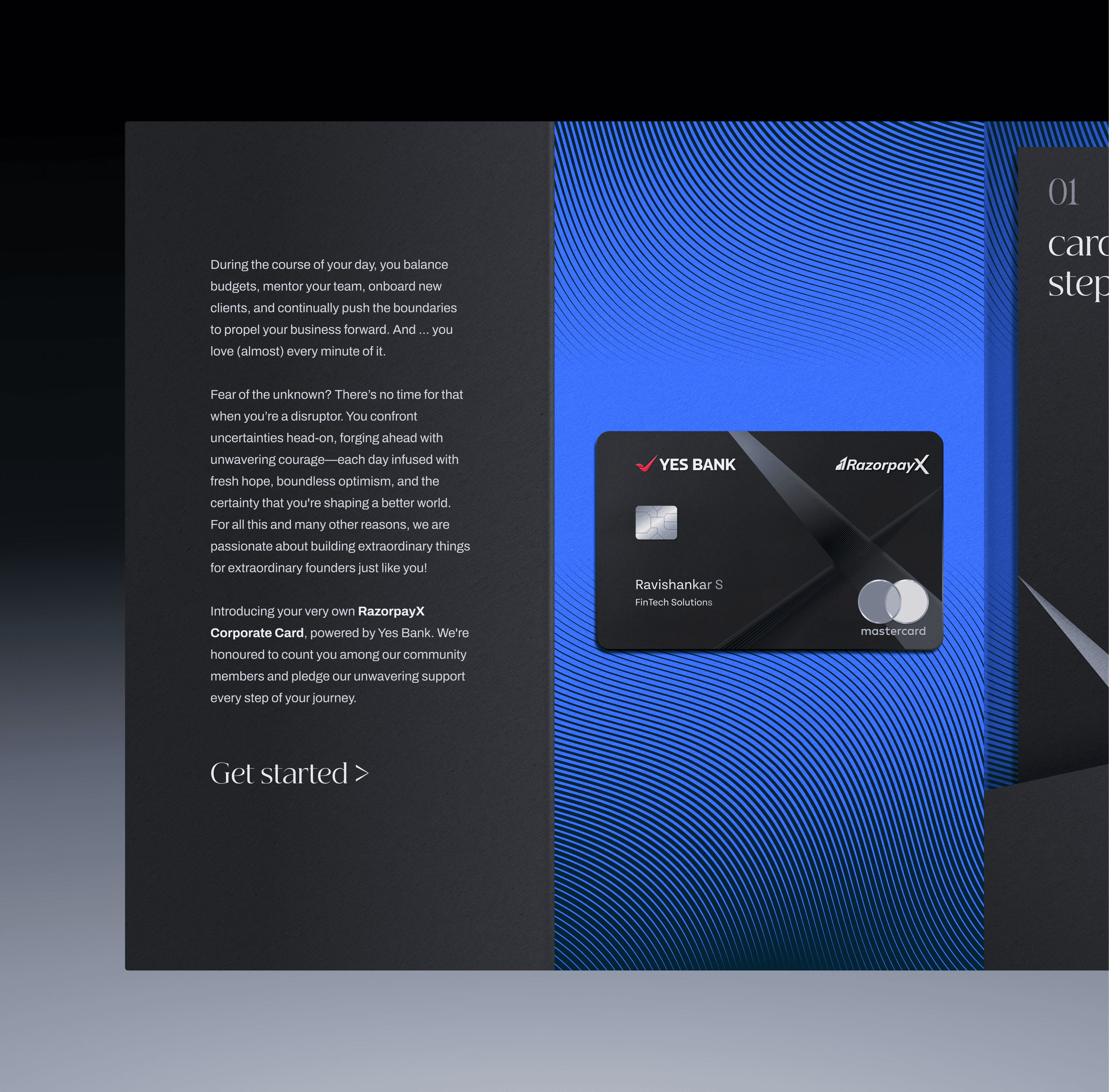
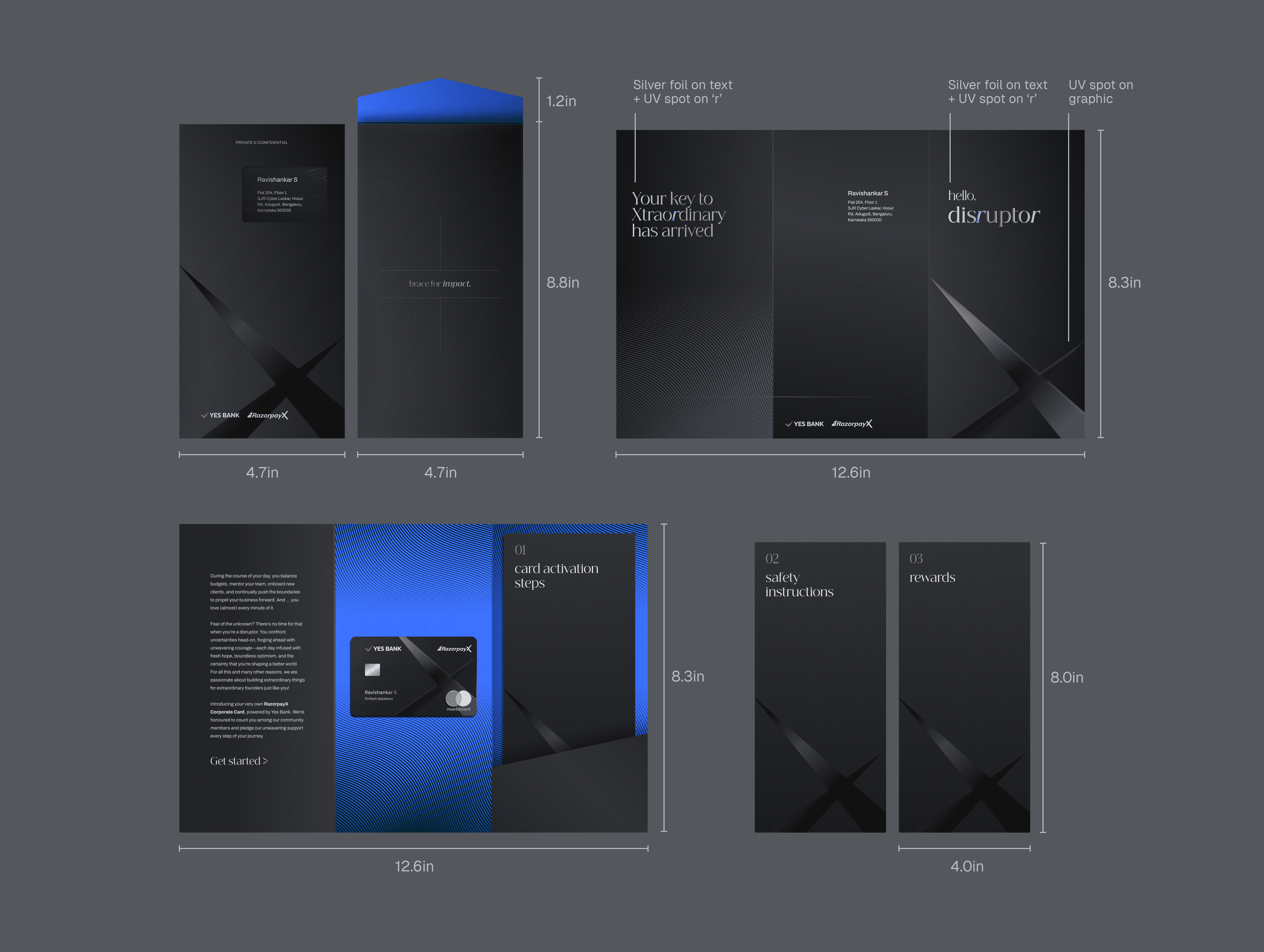
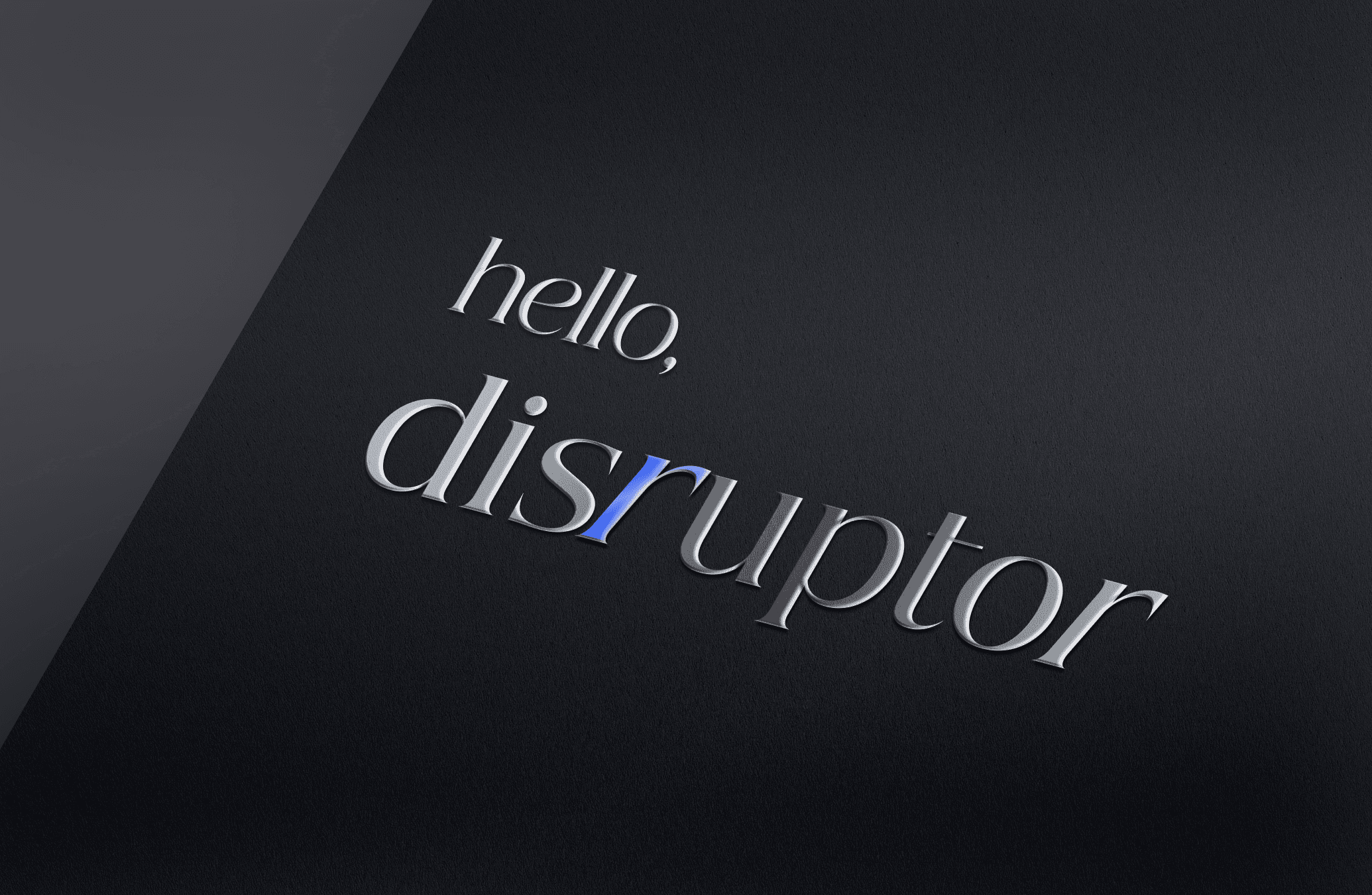
The package consists of a black colored envelope that shows the receiver’s address through a window. After the envelope is flipped and opened, a trifold folder with a welcome text can be retrieved. Opening the folder reveals a note along with the credit card attached to the center and inserts containing important information. The folder is carefully sized (selected after multiple iterations and testing) for holding comfortably and storing away easily.
card 2 - rbl bank - new explorations
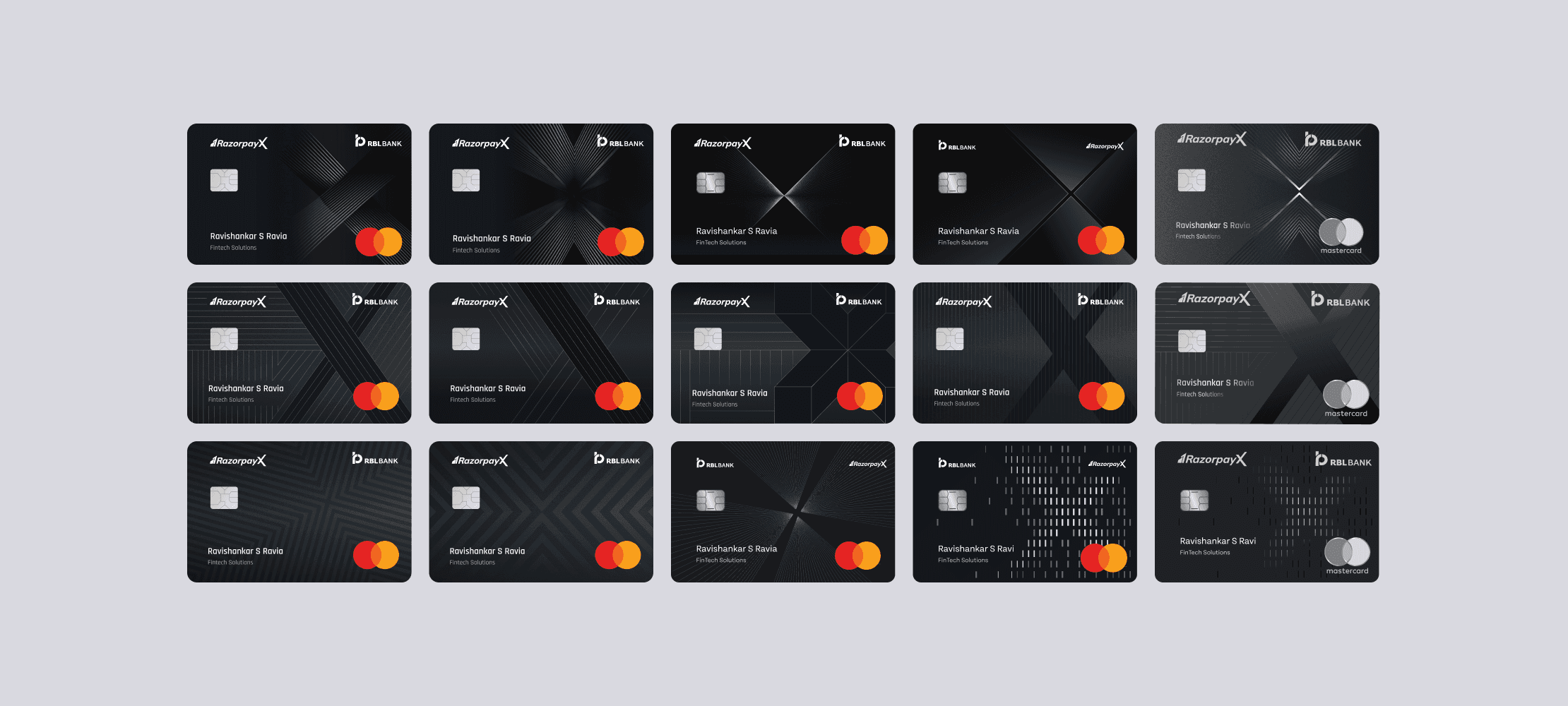
The designs for RBL bank card borrows similar principles from the already locked in Yes Bank card design. More forms were explored to design a distinct graphic for RBL bank. (Few options shown below)
card 2 - RBL bank - final design
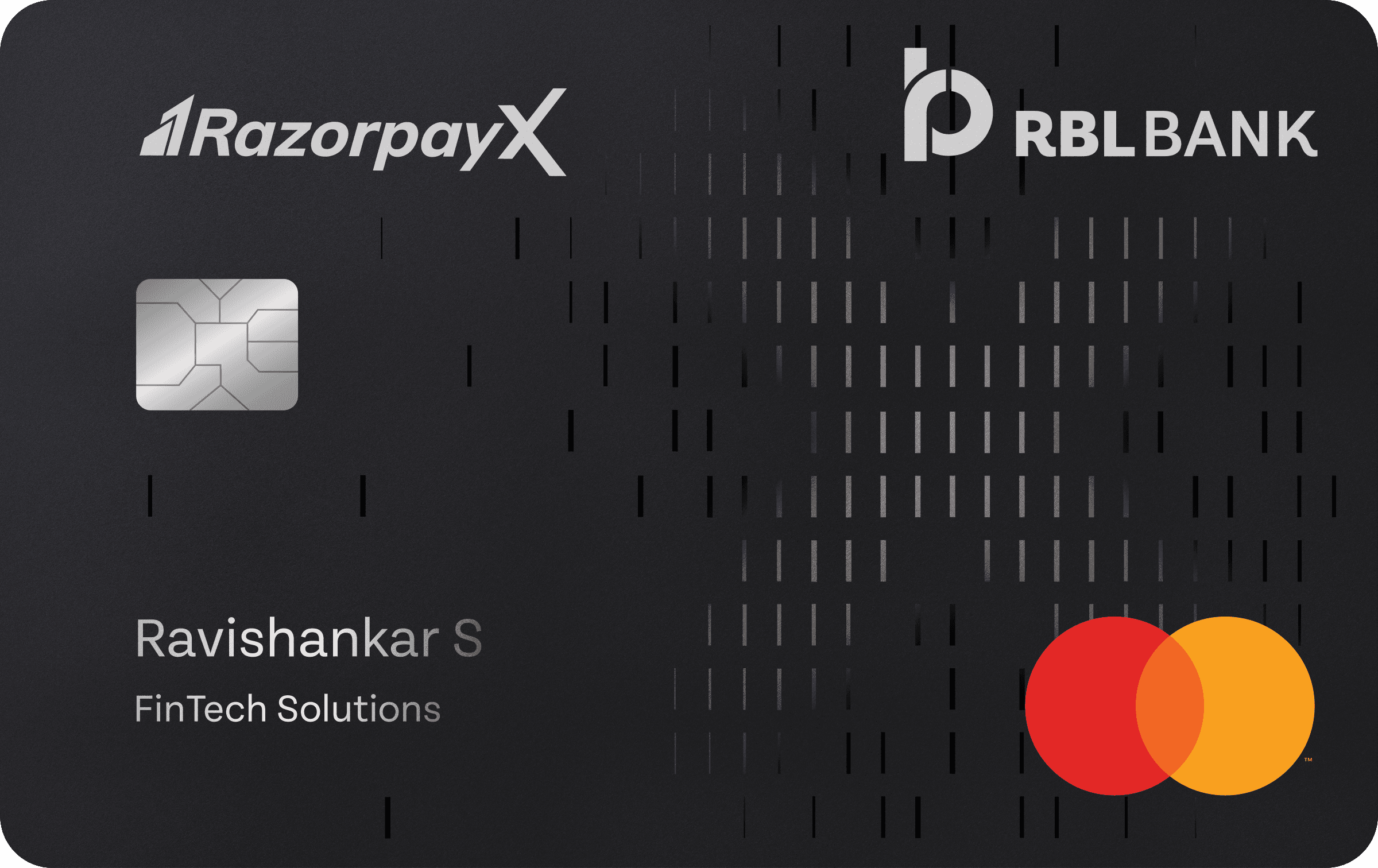
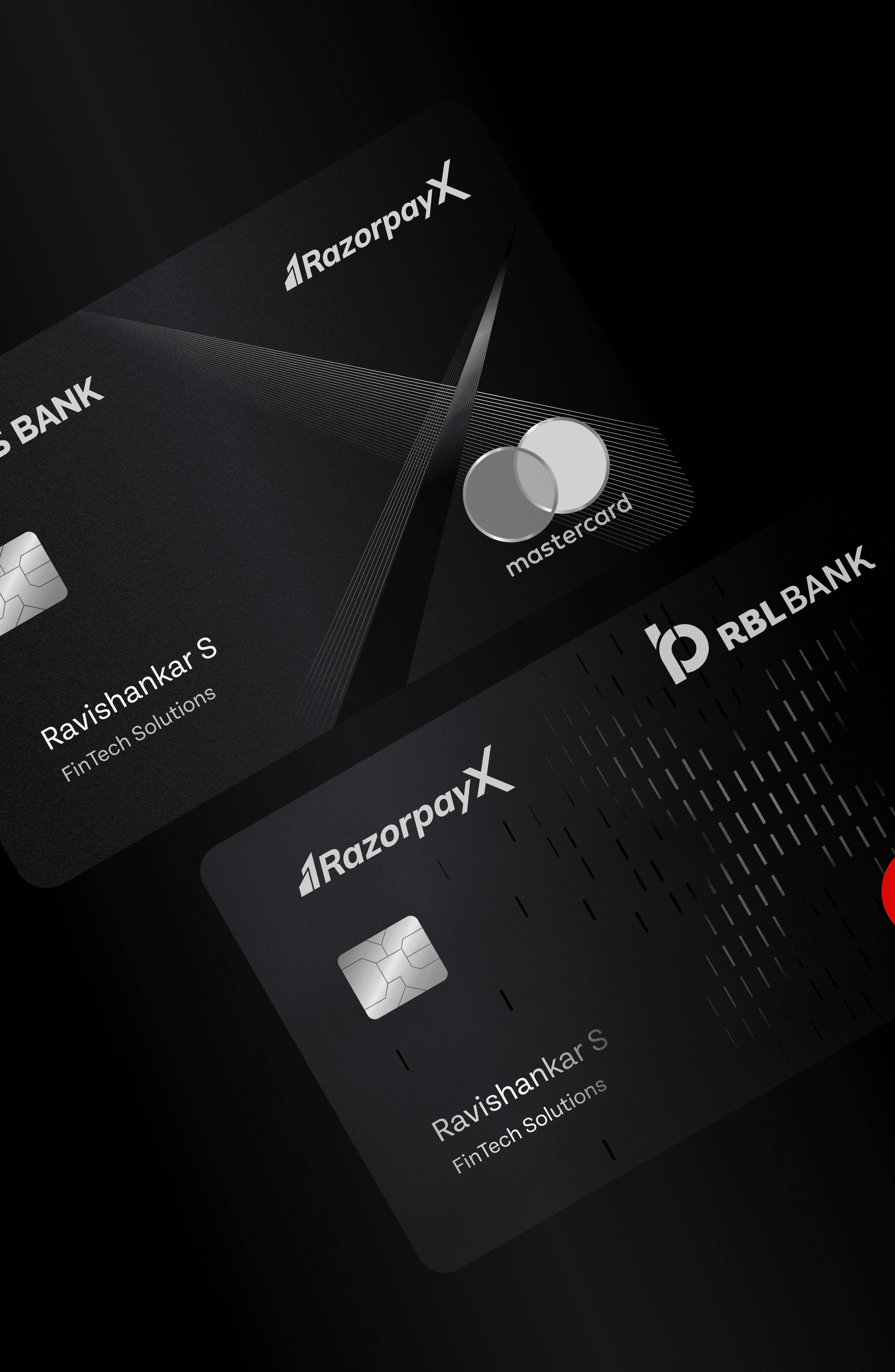
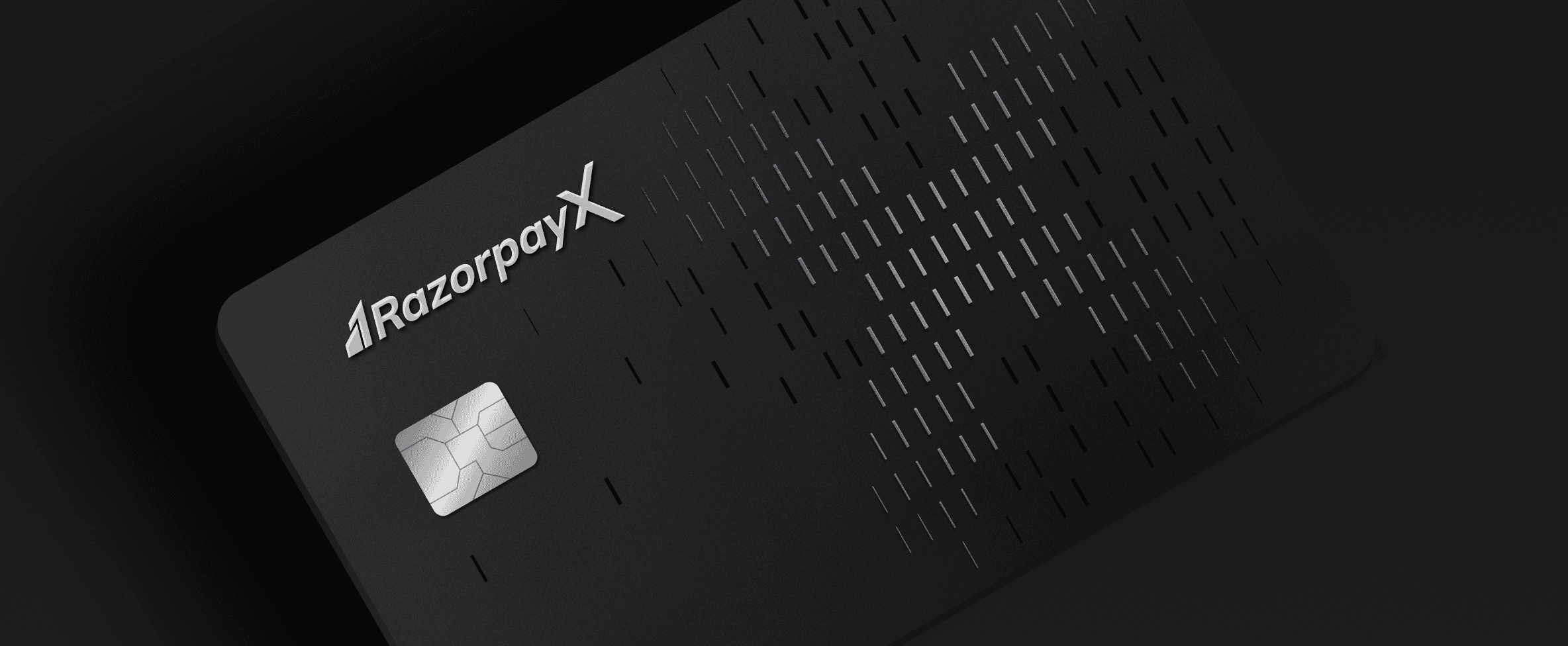
The final selected concept features a modern graphic over a dark base.
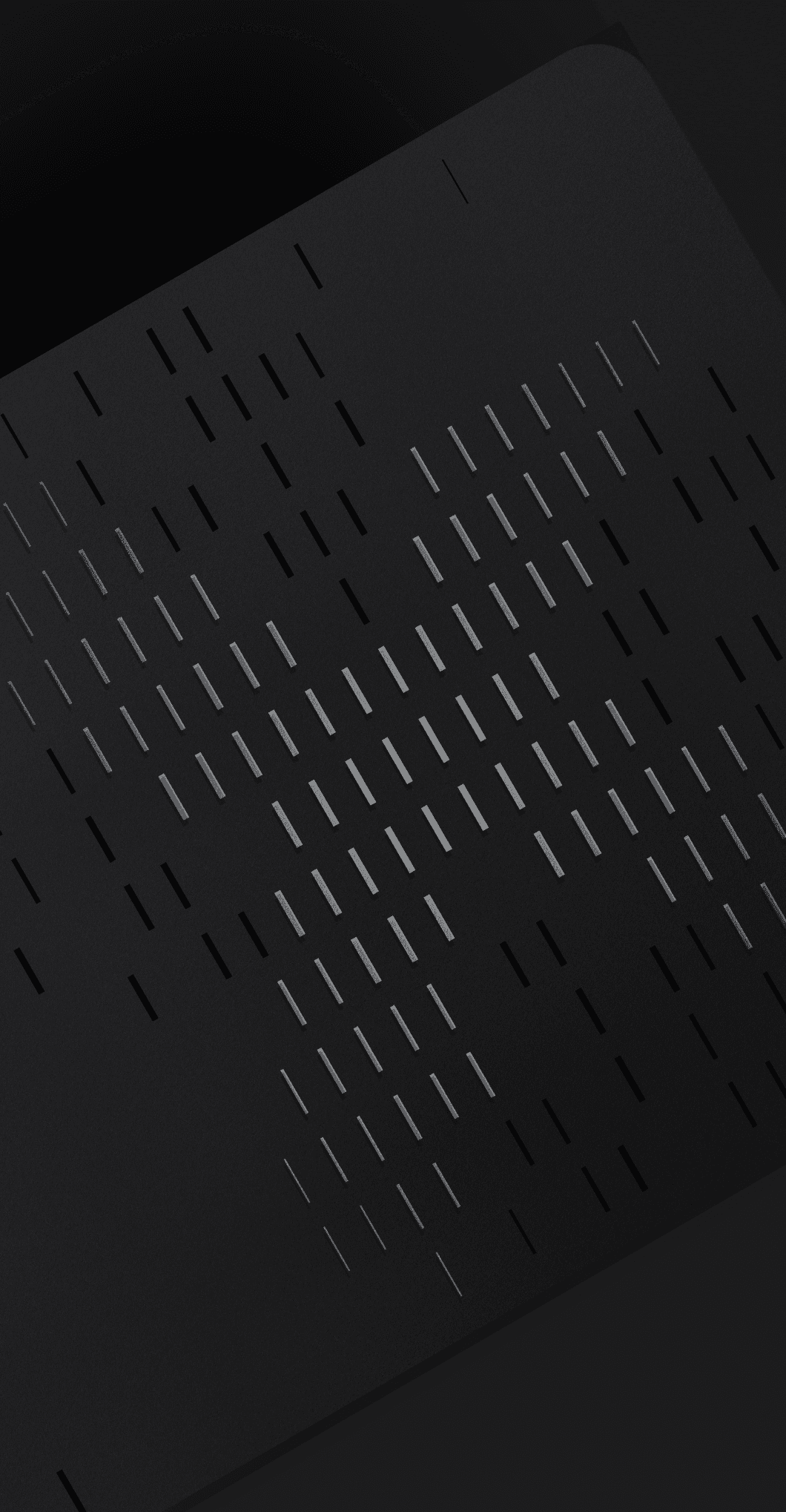
The ‘X’ form is composed of small lines varying in width that spreads out from the center of the X.
The clean layout, sizes and placement of elements adheres to Mastercard and RBL Bank guidelines. This is kept similar to the Yes Bank variant for consistency.
The elements on the frontside are limited to the graphic, cardholder’s name and branding alone.
Black, is again used as the base of the graphic for a premium finish.
Spot UV treatment over the ‘X’ part alone subtly enhances tactility - adds a layer of interest without being loud.
sampling and corrections
The sampling phase was done in multiple rotations. My role in the project ended after the first handover and sampling round. Corrections were made to layouts, sizes, material finishes to achieve a desirable output that fit all the design requirements.
Other Projects